
 Chinese
12V SPI RGB FL1903B strip lights
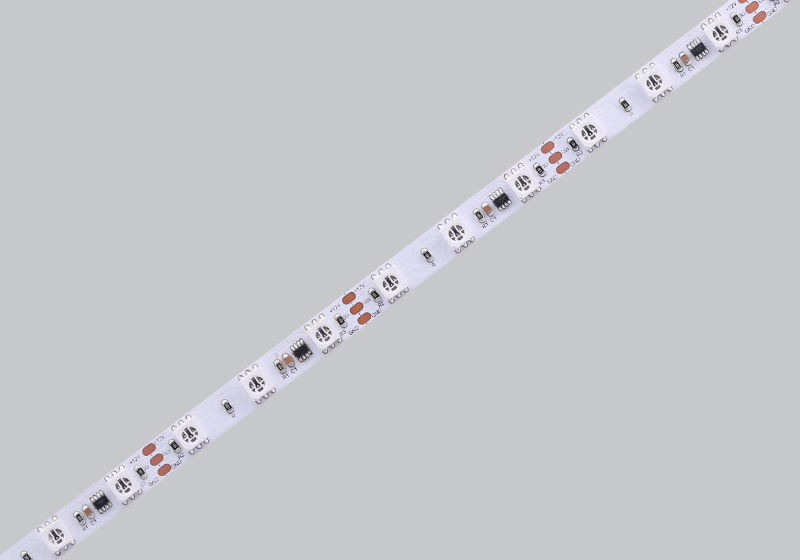



●Infinite Programable Color and Effect (Chasing, Flash,Flow,etc).
●Multi Voltage Available: 5V/12V/24V
●Working/Storage Temperature: Ta:-30~55°C / 0°C~60°C.
●Lifespan: 35000H, 3 years warranty


Color rendering is a measure of how accurate colors appear under the light source. Under a low CRI LED strip, colors might appear distorted, washed out, or indistinguishable. High CRI LED products offer light that allows objects to appear the way they would under an ideal light source such as a halogen lamp, or natural daylight. Also look for a light source’s R9 value, which provides further information about how red colors are rendered.
Need help deciding which color temperature to choose? See our tutorial here.
Adjust the sliders below for a visual demonstration of CRI vs CCT in action.
Warmer ← CCT → Cooler
Lower ← CRI → Higher
#ARCHITECTURE #COMMERCIAL #HOME #OUTDOOR #GARDEN
- Accurate color performance: SPI LED strips support precise color control and can display a rich variety of colors.
- Favorable refresh rate: With a good refresh rate, these strips help reduce flickering and improve overall lighting display quality.
- Delicate brightness adjustment: SPI LED strips allow fine-tuned brightness control, enabling smooth transitions in brightness for individual LEDs.
|
SKU |
Width |
Voltage |
W/m |
Cut |
Lm/M |
Color |
CRI |
IP |
IC type |
Control |
L70 |
|
MF250A060A00-D000I1A08103S |
8MM |
DC12V |
12W |
50MM |
/ |
RGB |
N/A |
IP20 |
FL1903B 17MA |
SPI |
35000H |
-
 specification


Related Products

cheap dimmale led strip lights

24V DMX512 RGBW 60LED strip lights
SPI SK6812 RGB LED strip lights

24V SPI RGB 84LED strip lights

12V SPI RGB 60LED strip lights
