
 Chinese
LED light strips, with their advantages of energy saving, flexible installation and strong atmosphere, have been widely used in various scenarios such as home decoration, commercial decoration, and engineering lighting. However, the quality of products in the market varies greatly, and many consumers, lacking professional knowledge, are prone to fall into misunderstandings when purchasing LED light strips, resulting in buying the wrong ones, poor effects, and even increasing the cost of later maintenance. This article summarizes the five most common mistakes that occur when purchasing LED light strips, combined with practical selection tips for LED light strips, to help everyone avoid the traps in LED light strip selection and choose LED light strip products that are suitable for needs and have high cost-effectiveness.
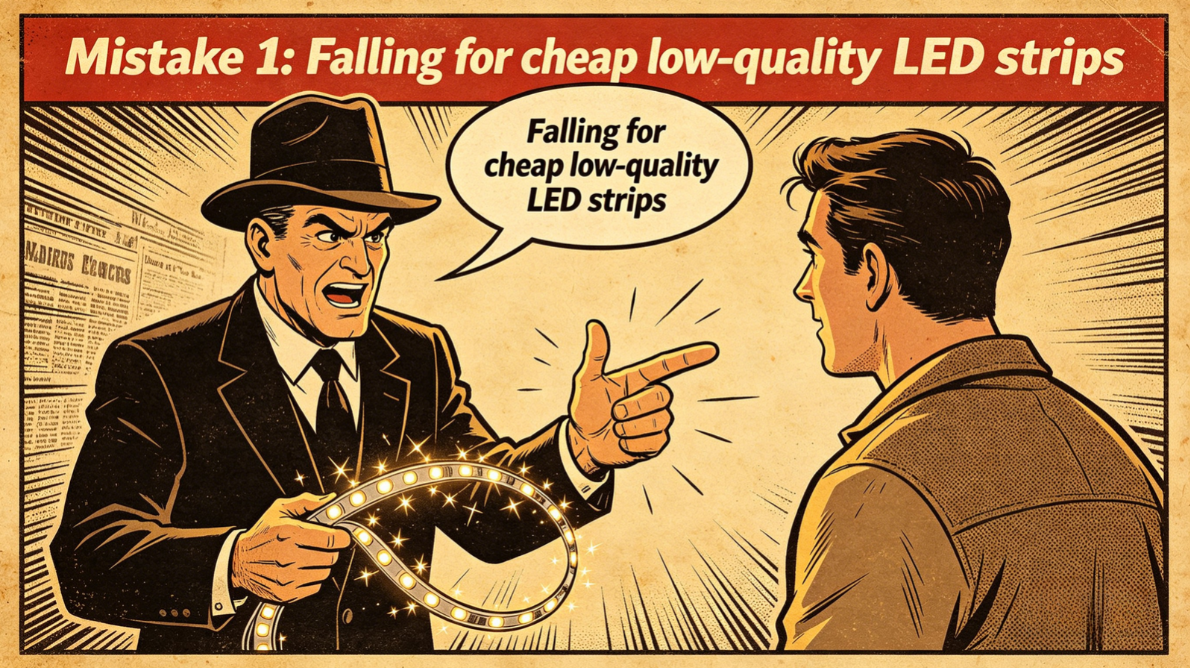
Error 1: Focusing solely on the price while neglecting the core quality
When choosing LED light strips, “only looking at the price” is the most common mistake. Many consumers are attracted by the low prices of LED light strips available on the market, which are only a few yuan per meter. However, they don’t realize that most of these LED light strips have the problem of shoddy workmanship – using inferior chips, ultra-thin PCB materials, and even omitting necessary heat dissipation structures and packaging processes. Although it seems to save initial costs, in fact, there are numerous hidden dangers in the future, which goes against the original intention of choosing high-value LED light strips with good performance.
The core problem with low-priced light strips lies in the following: the source of the chips is unknown, the light attenuation is fast, and the color drift is severe. Within half a year of use, there may be a sudden drop in brightness and color distortion. The PCB materials are too thin, the copper foil density is insufficient, and the heat dissipation performance is poor, which easily leads to yellowing of the light strips, dead lights, and even short-circuit risks. The packaging process is simple, and the waterproof and dustproof performance is insufficient, making it prone to damage in humid environments. Many users have reported that low-priced light strips need to be replaced completely within 1-2 years, which is actually more costly than medium-priced high-quality light strips.
To assess the core quality of the light strip, three key points should be focused on:
Firstly, the chip. Opt for chips with a clear brand and traceable source, as these chips have more stable light emission and longer lifespan;
Secondly, the PCB board. Choose double-layer copper plates with an appropriate thickness, which offer better heat dissipation and can effectively extend the lifespan of the light strip;
Thirdly, the packaging process. Observe whether the surface packaging of the light strip is uniform and free of damage. For waterproof models, confirm the sealing performance of the packaging to prevent water ingress and damage in the future. The correct logic for selecting LED light strips is: Cost-effectiveness does not equal low price. Based on your own needs, within a reasonable budget, prioritize choosing LED light strips with guaranteed core configurations to avoid repeatedly repairing or replacing the LED light strips due to the desire for low cost, which will instead increase the overall cost. Truly select high-value-for-money LED light strips.
Error No. 2: Blindly pursuing brightness while neglecting the details of light effects
When many consumers purchase LED light strips, they often fall into the misconception that “the higher the brightness, the better”. They blindly pursue high wattage and high lumen LED light strips, but overlook the core details of the light efficiency of LED light strips – light uniformity, color temperature compatibility, and color rendering. As a result, the effect of the LED light strips after installation is poor, and it even affects the user experience, contrary to the original intention of purchasing LED light strips.
Light uniformity is the key factor affecting visual experience: Poor-quality light strips have too large gaps between the light bulbs, resulting in a “star-like” grainy appearance or unevenly lit dark areas. When installed in areas such as ceilings and background walls, they will appear cheap and out of place, thereby lowering the overall decoration quality. For example, some users blindly choose high-brightness but sparsely-spaced light strips, and after installation, the wall shows obvious light and shadow mottling, failing to achieve the expected atmosphere effect.
Improper selection of color temperature can also affect the user experience: Different scenes require different color temperatures. For example, for home bedrooms and living rooms, 3000K – 4000K warm white light or neutral light is suitable, which is warm and soft and suitable for daily living; for commercial displays and office areas, 4000K – 5000K neutral light or cold white light is appropriate, which is bright and clear and enhances work and display efficiency. Blindly choosing high-color-temperature cold white light will make the space appear cold and depressing; choosing too low color temperature warm yellow light will make the space too dim, affecting visual clarity.
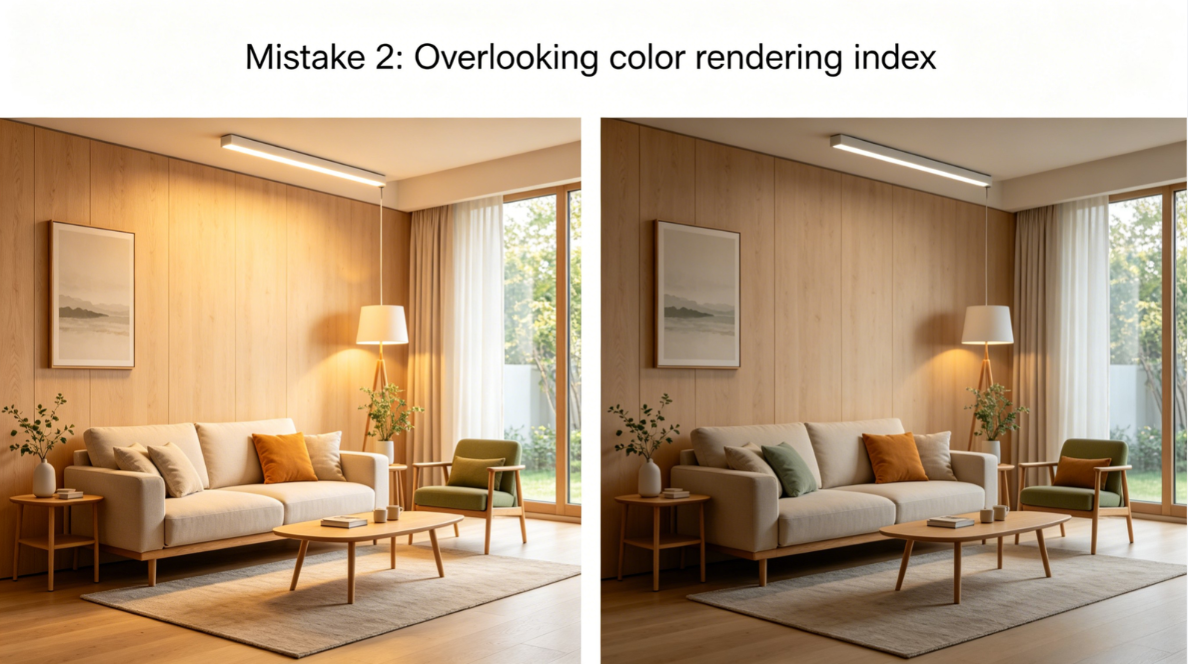
The color rendering index (CRI) is an important parameter that is often overlooked. It measures the ability of the light source to reproduce the true colors of objects, and the closer the value is to 100, the more realistic the color reproduction is. If the color rendering index is too low (below 80), it will cause color distortion of objects, such as the colors of walls and furniture appearing dull and off-color, especially in scenarios that require true color reproduction, such as display cabinets and mirror areas, which will affect the overall effect. For home decoration, it is recommended to choose LED light strips with a color rendering index of ≥ 90, which can better reproduce the colors of the space and enhance the living quality.
The correct approach is: Select LED light strips with appropriate brightness and light effect parameters based on the usage scenario, rather than blindly pursuing high brightness. For atmosphere decoration scenarios, choose LED light strips with medium brightness and uniform light; for basic lighting scenarios, choose LED light strips with moderate brightness and good color rendering properties, balancing practicality and visual experience, and select the LED light strips that are suitable for the requirements.
Error 3: Ignoring scene adaptation, and mismatch between parameters and requirements
The selection of parameters for LED light strips should be highly compatible with the usage scenarios. Many consumers, when purchasing LED light strips, do not clearly understand their own usage scenarios and blindly choose LED light strips with popular parameters, resulting in the inability of the light strips to meet actual needs and even causing safety hazards. They cannot fully achieve the expected effects of the light strips.
Voltage selection is the basis for scene adaptation: LED light strips are mainly divided into low voltage (12V, 24V) and high voltage (220V) types. Low-voltage light strips have high safety and soft light, suitable for close-range or small-space scenarios such as home decoration (such as ceilings, cabinets, bedside), children’s rooms, etc.; high-voltage light strips have high brightness and long transmission distance, suitable for large-area and long-distance installation scenarios such as commercial lighting, outdoor outline lighting, etc. Many users blindly choose high-voltage light strips in home scenarios, which not only makes the light too dazzling but also has certain electric shock risks, and the installation is complex, not suitable for DIY installation by families.
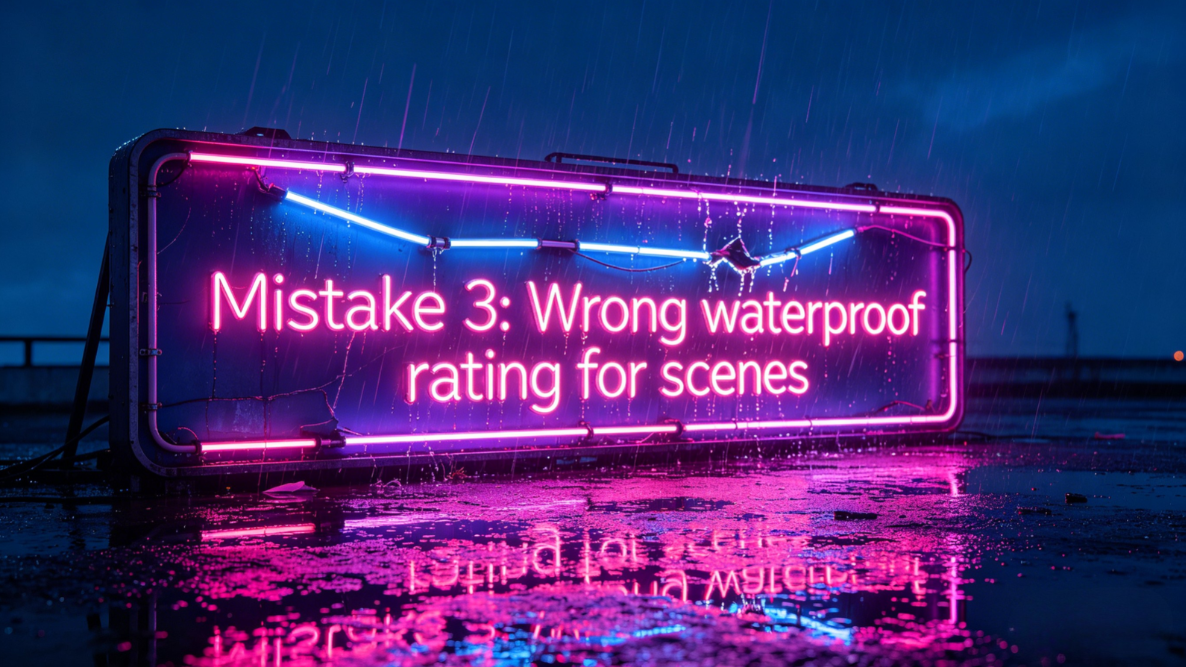
The waterproof grade directly determines the usage environment of the light strip: The waterproof grade is represented by IP, and different grades are suitable for different scenarios. IP20 is suitable for dry indoor environments (such as living room ceilings, study rooms), without waterproof protection, and cannot come into contact with water vapor; IP54 is suitable for humid indoor environments (such as kitchen, dry areas of bathrooms), can prevent splashing water vapor; IP65 and above are suitable for outdoor or humid environments (such as balconies, outdoor signs, dry areas of bathrooms), can prevent rain and immersion. If a light strip with insufficient waterproof grade is selected in a humid environment such as a bathroom or balcony, it is very likely to cause short circuits and damage; while in a dry indoor environment, choosing a light strip with a high waterproof grade will increase unnecessary costs.
The type of light strips also needs to be suitable for the specific environment: The flexible FPC light strips can be bent and cut, making them suitable for irregular spaces (such as curved ceilings, special decorations); the rigid PCB light strips have good heat dissipation and strong stability, and are suitable for long-term fixed installation (such as commercial counters, outdoor outlines). Many users installed rigid light strips on curved ceilings, but they couldn’t fit the curved surface, resulting in installation difficulties and poor effects; while in the long-term fixed scenarios, choosing flexible light strips is prone to deformation and sagging after long-term use.
The correct approach is: First, clearly define the usage scenario of the LED light strips (indoor/outdoor, dry/wet, regular/irregular spaces), then select the corresponding voltage, waterproof level and light strip type based on the scenario to ensure that the parameters of the LED light strips match the requirements, meeting the usage needs while avoiding resource waste and safety hazards, and choosing the appropriate LED light strips that are suitable for the environment.
Error No. 4: Ignoring installation and compatibility, leading to numerous subsequent problems
Many consumers believe that “buying the right LED light strips is enough”, neglecting the details of installation and the selection of accompanying equipment, which leads to poor installation effect, shortened lifespan, and even potential safety hazards for the LED light strips. The installation of LED light strips and the selection of accompanying equipment directly affect the usage effect and lifespan of the LED light strips, and cannot be ignored.
There are three common installation mistakes:
First, bare light strips without using aluminum troughs, resulting in scattered and messy light, jagged shadows on the wall, and poor heat dissipation of the light strips, accelerating light attenuation and aging;
Second, improper wiring, with single segments of low-voltage light strips being too long and not using both ends for power supply, causing “bright at the head and dark at the tail”, affecting the visual effect, and at the same time, messy wiring and loose interfaces, prone to poor contact and short circuits;
Third, ignoring heat dissipation, directly attaching the light strips to non-heat-dissipating surfaces such as gypsum boards and wooden materials. After long-term use, due to the inability to dissipate heat, the light strips turn yellow, become dead, and even pose fire hazards.
The selection of supporting equipment is also crucial, among which the power supply is the core: The power supply is responsible for converting household voltage into the voltage suitable for the light strips, and its quality directly affects the stability and lifespan of the light strips. Many users, in an attempt to save costs, choose inferior power supplies, resulting in flickering lights, unstable brightness, and even burning out the light strips; the power of the power supply needs to match the power of the light strips, and it is recommended to reserve about 25% of redundancy to avoid overload damage.
The aluminum trough is the “assistant magic weapon” for light strips, not only can it hide the light strips and make the light more uniform and soft, but also helps the light strips dissipate heat and extend their lifespan. It is especially suitable for high-power light strips. The connection terminals can ensure that the interface of the light strips is firmly connected, avoiding poor contact. It is recommended to choose terminals that match the battery cells of the light strips to ensure stable connection.
The correct approach is: Install LED light strips in a standardized manner. High-power LED light strips must be installed with aluminum troughs to ensure good heat dissipation; when wiring, follow the product instructions for LED light strips. For low-voltage LED light strips, the single segment length should not be too long; when necessary, use dual power supply; choose high-quality power supplies and connection terminals that are compatible with the parameters of the LED light strips to avoid potential problems for the LED light strips in the future due to inferior supporting equipment.
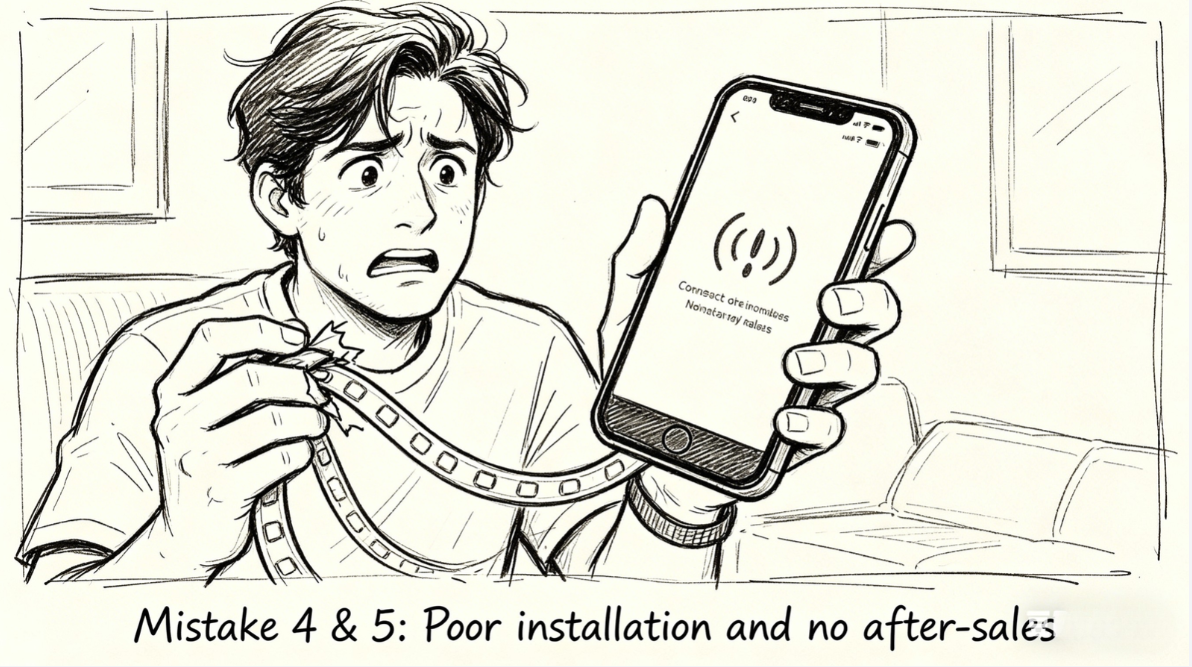
Error Five: Failure to pay attention to after-sales guarantee, making it difficult to seek redress in case of problems.
LED light strips are durable consumer goods, with a typical lifespan of 5 to 10 years. After-sales guarantee is an important aspect to consider when purchasing LED light strips. Many consumers only focus on the price and parameters of the LED light strips when making a purchase, but fail to pay attention to the after-sales policies. Once the LED light strips have quality issues, it is difficult to seek redress and they can only bear the losses themselves.
The core of after-sales guarantee includes three aspects:
First, quality guarantee. Regular brands will provide a clear warranty period. For non-human-induced quality problems of core components such as chips and PCB boards, they will offer free repair or replacement services.
Second, installation guidance. For consumers who are not familiar with the installation process, high-quality brands will provide professional installation guidance to help standardize the installation and avoid problems caused by improper installation.
Third, repair services. In case of faults during the use of the light strips, timely repair services can be provided to reduce the later maintenance costs.
The common post-sale misunderstandings are as follows: Ignoring the post-sale policies, purchasing “three-no” products (without brand, without warranty, and without quality guarantee), and once quality issues arise with such products, it is impossible to contact the merchant and one can only replace them by oneself; Believing in the verbal promises of the merchants, such as “five-year warranty” or “lifetime repair”, but not clearly stated in the purchase contract or product description. When problems occur later, the merchants refuse to fulfill the promises, making it difficult for consumers to seek legal protection.
The correct approach is: When choosing LED light strips, prioritize choosing regular brands, check the post-sale policies of the LED light strips, confirm the warranty period, warranty scope, repair process, etc., and it is best to keep the purchase vouchers and post-sale commitment records; Avoid purchasing “three-no” LED light strips, even if the price is low, they will also increase the cost of later legal protection due to the lack of post-sale guarantees, and ensure that the selected LED light strips have post-sale guarantees.
Buying LED light strips may seem simple, but in reality, one needs to avoid the “only focusing on price, blindly chasing brightness, ignoring the scene, neglecting installation, and not considering after-sales service” these five major mistakes. The core of choosing LED light strips is “matching the requirements, paying attention to quality, standard installation, and having a guaranteed after-sales service”. Based on one’s own LED light strip usage scenario, pay attention to core points such as LED light strip chips, PCB boards, light efficiency parameters, and supporting equipment, so as to select high-performance and user-friendly LED light strip products.
Whether it is for home decoration, commercial decoration, or engineering lighting, choosing the appropriate LED light strips not only enhances the spatial texture but also saves the maintenance cost of LED light strips in the future, achieving “one choice, long-term benefit”. We hope that the content of this article can help everyone avoid the traps in LED light strip selection and easily select LED light strips that meet the requirements.
Facebook:https://www.facebook.com/profile.php?id=100089993887545
Instagram:https://www.instagram.com/mx.lighting.factory/
YouTube:https://www.youtube.com/channel/UCMGxjM8gU0IOchPdYJ9Qt_w/featured
LinkedIn:https://www.linkedin.com/company/mingxue/
Post time: Apr-16-2026