
 Chinese
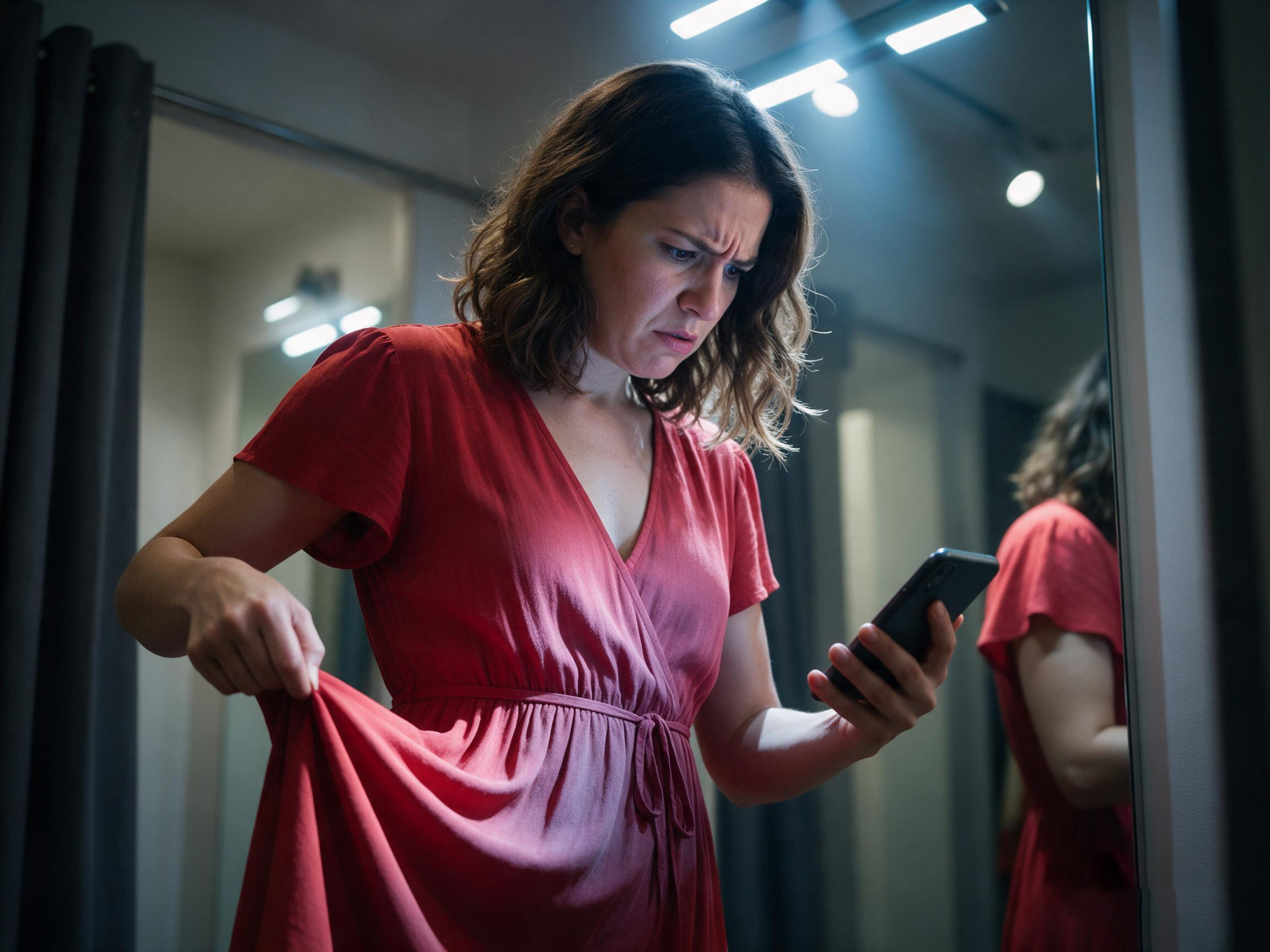
A clothing store owner reached out to our team after a rough month. He’d bought a high-lumen LED strip light straight off the spec sheet, figuring the brightest roll would make his garments pop. It did the opposite. The minute the fixtures came on, every red dress turned a muddy liver color and shoppers tried things on, then left. Sales dropped about a third before he traced the problem back — it was never about brightness, it was color rendering. The LED strip he’d installed carried a CRI barely above 70, and CRI is the number that tells you how faithfully a LED strip light matches natural sunlight.
We’ve been making LED strip light since 2005, and the same question keeps coming back: how do you balance high color rendering against high output, and what CRI is good enough for LED strip lights in the first place? The two specs get tangled in a lot of buyers’ heads, and the mix-up costs real money on a sales floor, inside a showroom, or in a shadowless lighting design where a hidden LED strip does all the heavy lifting. This guide walks through how to choose LED strip lights without that regret — what CRI actually measures, why lumens and perceived brightness aren’t the same number, and how to set the right figures for a retail store versus an outdoor lighting project.
 1、What CRI on an LED strip light actually measures
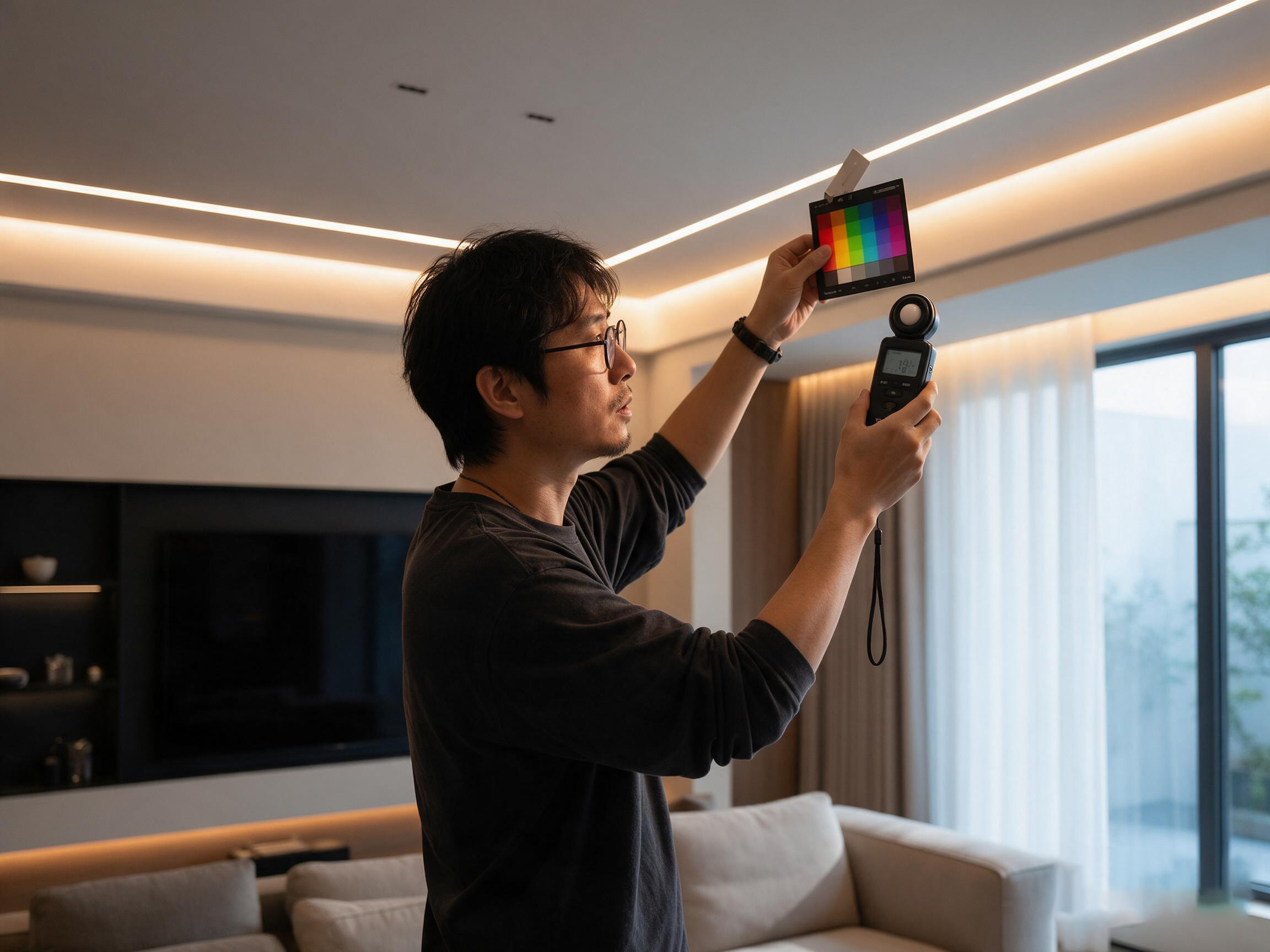
CRI stands for Color Rendering Index, but the short version is simpler: does this LED strip light show colors the way daylight does? To work it out, engineers first measure the LED strip‘s spectral power distribution, or SPD — the exact mix of wavelengths the diodes give off — then shine that light on 15 standard color samples and check how each one comes back. The closer the colors sit to what those same samples show under a reference source, the higher the score.
The catch is that CRI is an average across those 15 samples. A high average can still hide a weak spot, and that weak spot is almost always red. That’s why a separate number, R9, isolates a saturated red sample and measures it on its own. A LED strip light can post a 90 overall and still butcher a red garment if its R9 has fallen off a cliff — exactly what happened in that clothing store.
This is also where people collapse two unrelated specs into one. Color temperature says whether the light looks warm or cool; CRI says whether colors look right. The question of what color temperature for LED strip lights is right has nothing to do with how accurately they render color. A 6500K cool-white LED strip can render color beautifully or terribly, and the same confusion shows up in the 3000K vs 4000K LED strip light debate. Put the two things in separate boxes, and you’ll stop chasing the wrong number.
2、Why LED strip light lumens don’t match what you see
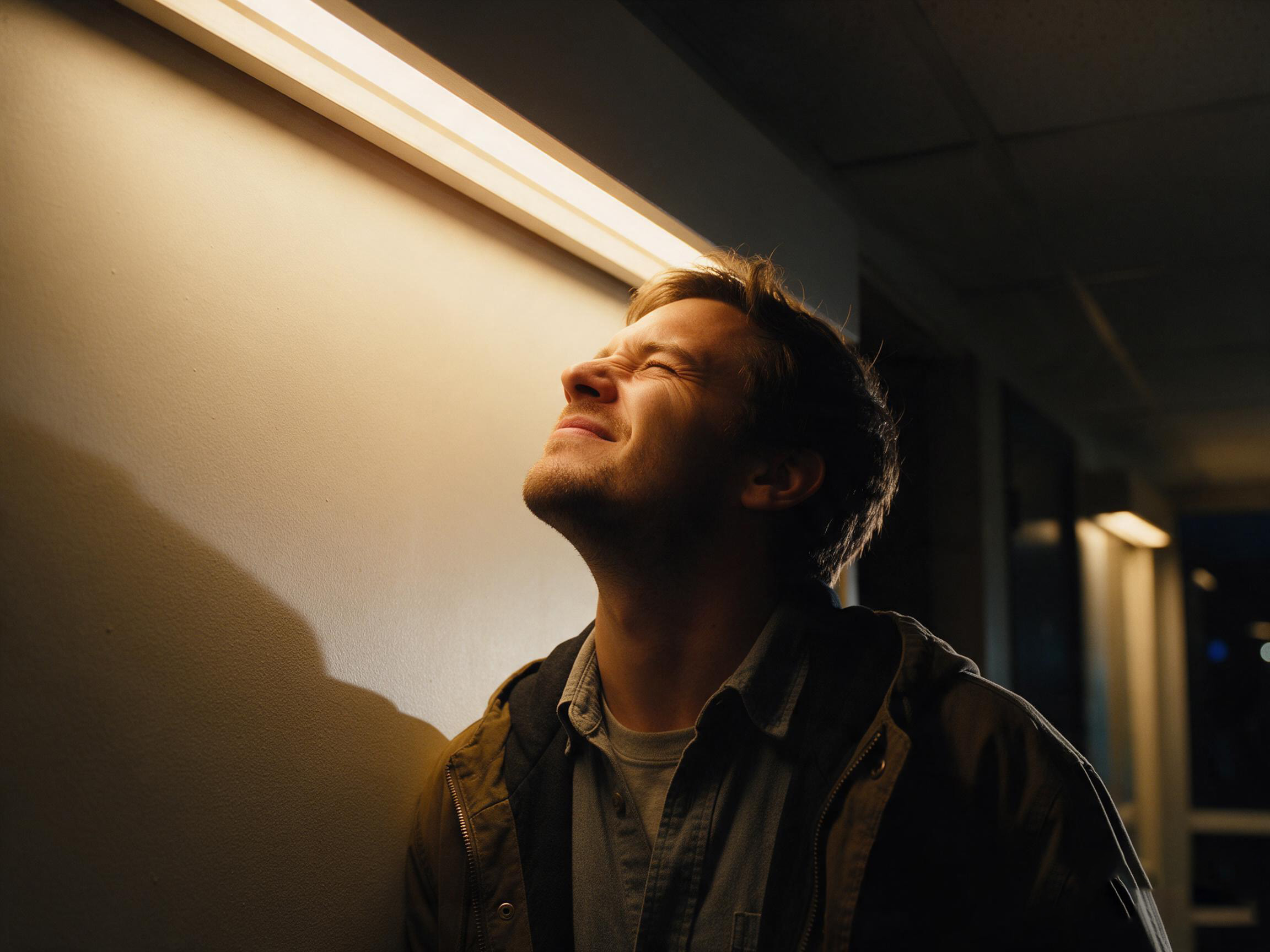
Lumens tell you how much light a LED strip light puts out in total — a hard number measured off the diodes. “Bright” is a different animal: it’s what the eye registers. People swap the two all the time, which is why someone buys a LED strip with an impressive lumen rating and still feels let down once it’s on the wall. Sitting between them is efficacy, or lumens per watt — how much visible light you get for each watt of electricity you’re paying for.
The reason for the gap is the human eye. Our vision only responds to a slice of the spectrum, so ultraviolet and infrared carry real energy yet read as basically invisible. Two LED strip light products with identical lumen figures can look noticeably different in brightness if their spectra are shaped differently. There’s a blunt saying in the trade: lumens are the number the seller reports, and brightness is what the buyer actually sees — the spectrum sits in between. It also explains why judging a LED strip by its lumen number alone so often ends in disappointment.
Behind this sits an older piece of science called the luminous efficiency function. Back in the early 1900s, researchers worked out how the eye’s sense of brightness shifts with wavelength, and that curve became the base of photometry. It comes in two versions: the daylight one peaks around 545 to 555 nanometers, right in the yellow-green, while the night version drifts toward blue-green. Both fall off hard at the edges — get past 650 nanometers into red, and the number is basically nothing.
In practice this means green and yellow wavelengths “make” brightness, while red, deep blue and violet barely register even when they’re physically there. It’s why safety vests and highlighters are almost always yellow-green. It’s also why a LED strip heavy on red chips never looks very bright no matter what its lumen rating says, and why a warm-white LED strip light can feel soft and dim even though its lumen count is perfectly healthy. One more quirk follows from the same curve: as a LED strip dims, red falls away faster than green, so a warm light looks heavier and darker at low output. That’s your eye doing the work, not the fixture — and it has nothing to do with CRI.
3、High CRI vs high efficacy on an LED strip light — the trade-off
The logic underneath is simple. A LED strip light that renders color beautifully — especially saturated red, the R9 sample — needs a broad spectrum that reaches across the visible range. A LED strip tuned for maximum efficacy does the opposite: it piles its output into the yellow-green band where the eye is most sensitive, and trims the exact wavelengths good color rendering depends on. The two goals pull in opposite directions, and plenty of products on the market quietly trade CRI away to print a higher lumen-per-watt figure.
R9 is the line where serious products separate from the rest. Saturated red is the hardest sample to get right, and it’s exactly where a lot of LED strip light products stumble. In a shadowless lighting design, the hidden LED strip in the ceiling cove is effectively the room’s main light source, so low CRI doesn’t just look slightly off — it drains the color out of the whole space and leaves skin tones and food looking grey. That’s the argument for treating shadowless lighting as a high-CRI job instead of a budget one. Our high-CRI COB LED strip, for example, uses a wider phosphor blend to lift R9, and that’s what keeps a living room from looking washed out. The table below is the rule of thumb we hand customers first.
|
CRI range |
What the color looks like |
Where it fits |
| Below 80 | Noticeable color shift | Parking garages, warehouses |
| 80–90 | Good enough for most work | General commercial lighting, corridors |
| Above 90 | Close to natural daylight | Homes, showrooms, makeup areas |
4、Commercial lighting vs outdoor LED strip: how to pick CRI and lumens
Where the light is aimed changes everything. In commercial lighting the rules are strict: a clothing store, a cosmetics counter, or a jewelry display needs a LED strip light with CRI of 90 or better, because when the reds are weak a ruby or a steak looks dead and the sale walks out the door. The same story plays out at a fresh produce counter, where red meat and leafy greens that read grey just sit there unsold. Gold counters are the harshest test — warm metal falls flat the instant red rendering dips. The same goes for linear light run as a hidden cove source: people see it up close, so bad color rendering shows right away and has nowhere to hide.
Outdoor work flips those priorities. A lighting engineering project on a building facade or a bridge gets read from a distance, where the eye catches overall mood and brightness rather than fine color differences. There, efficacy and running cost matter more, and CRI around 80 is usually plenty. There’s a saying in the trade — “color quality makes way for efficacy” — and it applies to outdoor lighting project work specifically. The same LED strip that belongs in a bedroom doesn’t belong on an exterior wall; one product, two different jobs.
|
Scenario |
CRI priority |
Efficacy priority |
| Home, bedroom | High (90+) | Standard |
| Clothing store, showroom | High (90+) | Medium |
| Outdoor lighting project | Medium (80+) | High |
5、Frequently Asked Questions About LED strip light CRI
Q1: What CRI is good enough for LED strip lights?
A: Homes and commercial spaces should sit at 90 or above. Warehouses, parking areas and most outdoor work can settle for 80. Match the number to what the light has to show, rather than chasing CRI for its own sake.
Q2: Does a higher CRI make LED strip lights brighter?
A: No. CRI measures color accuracy, not output. A high-CRI LED strip often trades away some efficacy, so it can feel slightly dimmer at the same wattage. Pick the spec the space actually needs.
Q3: Do high-CRI LED strip lights use more power?
A: They can. Rendering red well needs a broad spectrum, so a high-CRI LED strip light usually shows lower lumens per watt at equal brightness. Indoors, that small energy cost is worth paying.
Q4: What LED strip should I use for an outdoor lighting project?
A: For facades and landscape, prioritize high efficacy and weather resistance with CRI around 80 or more. Distance makes fine color differences hard to see, so energy and durability beat perfect rendering.
Q5: How is LED strip light CRI measured?
A: An integrating sphere captures the spectral power distribution, then software compares 15 standard color samples against a reference source to compute the CRI. Ask the manufacturer for a real test report instead of a printed number.
Match the LED strip to what the room or facade actually has to show. Color accuracy matters where people stand close and money changes hands; brightness and efficiency matter where the eye reads only mood and scale. Mingxue Optoelectronics has been making LED strip light since 2005. The group runs a Shenzhen R&D and sales center alongside a 24,000 sqm manufacturing base in Foshan — Foshan Mingxue Optoelectronics Co., Ltd. operates as a wholly-owned subsidiary of Mingxue Optoelectronics Holding Co., Ltd. The facility is ISO 9001 certified, alongside IATF16949, UL, CE, SAA and ErP.
Our LED strip light reaches CRI above 97, up to 200 lumens per watt, color consistency within SDCM<3, and a design life of 50,000 hours; the same lines supply IKEA, Walmart and BYD. We can also run a sample LED strip light against the spec to confirm CRI and R9 before you commit to a full roll. If you’d like to learn more about our LED strip lights or get a quote, feel free to leave your contact details on our official website, or call us at +86 137 1903 7641 (same number on WeChat).
MINGXUE is the brand name of Shenzhen Mingxue Optoelectronics Co., Ltd. For international markets, the company operates under the brand name MINGXUE Lighting.
Facebook:https://www.facebook.com/profile.php?id=100089993887545
Instagram:https://www.instagram.com/mingxuelighting.factory/
YouTube:https://www.youtube.com/channel/UCMGxjM8gU0IOchPdYJ9Qt_w
LinkedIn:https://www.linkedin.com/company/mingxue/
Post time: Oct-14-2026