
 Chinese

A flexible LED strip light bends. It just never bends for free. Push a straight run through a curved ceiling cove and something has to give, and nine times out of ten it is the board — it buckles, the adhesive peels back, and the light comes out in bright and dark patches instead of one clean line. We have seen it happen on more drawings than we care to remember, because a drawing can show a perfect 45-degree curve and the builder on site still has to persuade a flat circuit board to follow it. A straight channel only has to carry light. A curved one has to hold a shape at the same time. Those are two different jobs, and that is the whole problem. Mingxue Optoelectronics has been making LED strip light since 2005, and irregular, curved channels have stayed one of the harder parts of the trade for all of those years. So the question installers bring us is rarely whether the tape can bend. It is how to install LED strip lights around a curve without wrecking the board or the glow. That is what this guide walks through — what to pick, how to plan the bend, and how to mount it so the curve reads even on both sides.
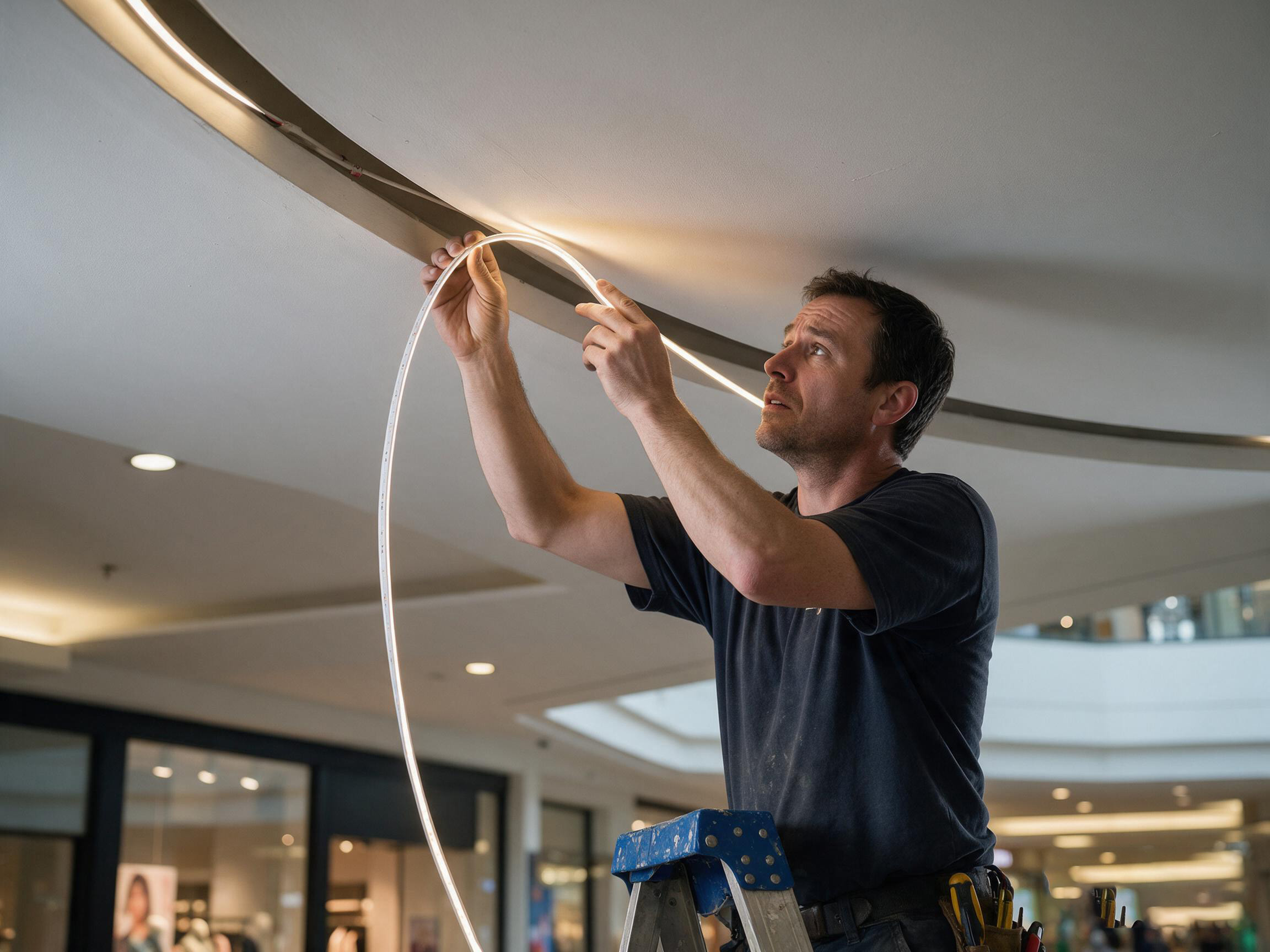
1、Why a curved channel is where most LED strip installs go wrong
Straight channels are easy. The board just sits there. Curved ones are a different story.
Take a ceiling cove that bends. The strip has to follow that bend, and it gets flexed the whole way round. One crease is not the problem, either. It is the flexing, over and over, that cracks the copper. We have pulled enough dead strips off enough ceilings to know this cold.
The shapes we see most: arc coves, wavy ceilings, round pendant rings, curved feature walls, art installation outlines. Pick the wrong strip for one of these and you get creases, lifted edges, a light line that stutters through the turn.
So when an irregular ceiling shows up on a plan, the first question we get is what LED strip to use for shadowless lighting design. The answer lands on a flexible product almost every time. How to layout LED strip for shadowless lighting is nothing like laying it flat — the run keeps changing direction, and every fixing point sits somewhere different.
Malls, showrooms, hotel lobbies. These curved ceilings have multiplied over the last couple of years. Whether the material flexes enough is usually what decides if the shape gets built at all. And once the arc runs tighter than the board can take, no amount of pressing will save it. The copper cracks from the inside out.
Last year a hotel lobby came back to us. Straight run, wavy cove. Half the strip dead in a month. We swapped it for a silicone flexible neon LED strip. Still running a year later. The curve finally stayed lit.
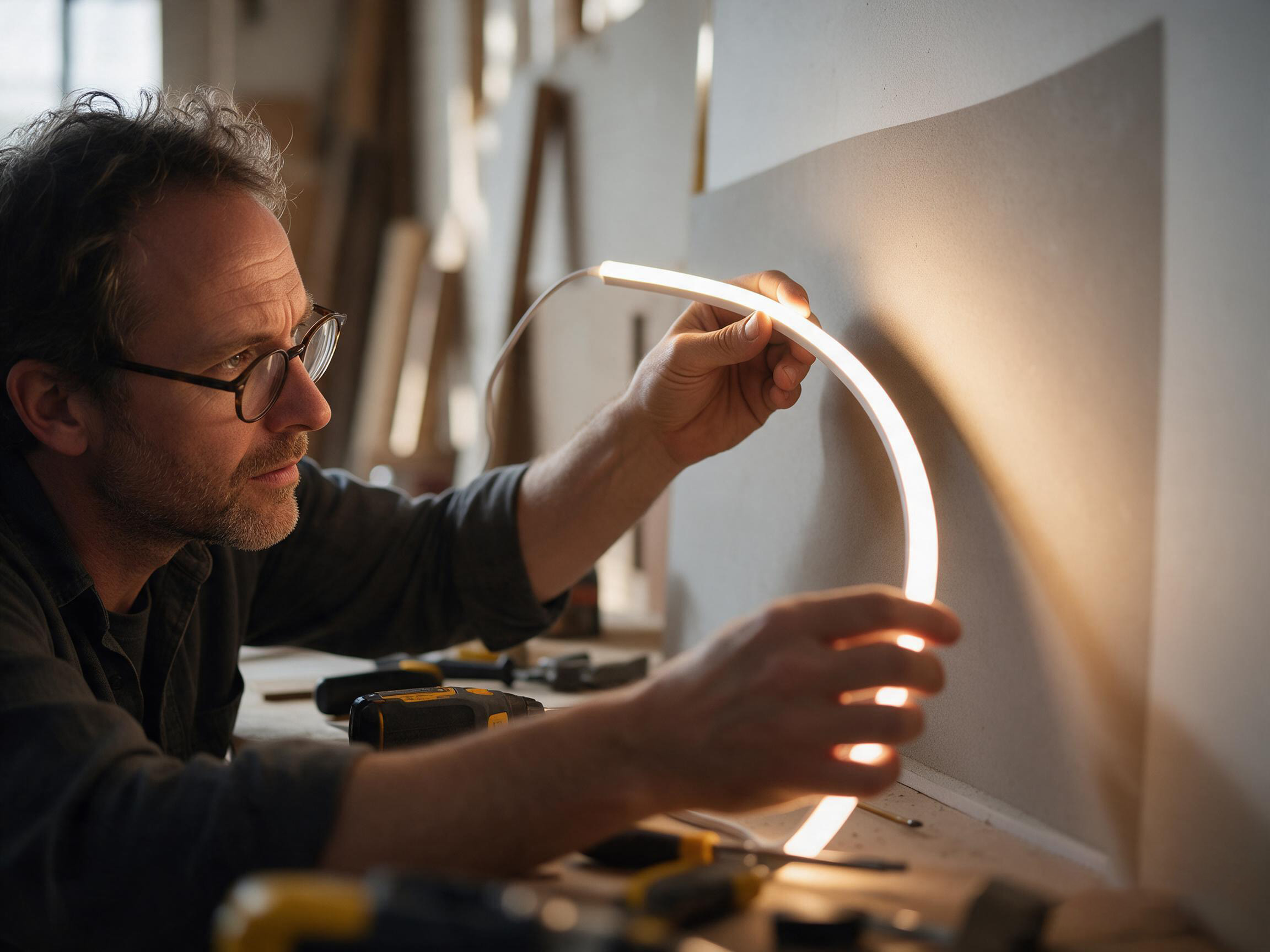
2、Which flexible LED strip handles a curved channel best
Some strips just die the minute you bend them across a complicated surface. Right. So really there are three kinds we reach for on almost every curved channel, and the COB LED strip vs SMD LED strip call settles it most of the time.
You want light with no dots showing? Go COB LED strip. The chips sit tight, a few hundred to the meter, so the glow runs through without a break. Bend it around an arc and you do not get the dotted line you get with an SMD LED strip. That is why high-end shadowless lighting design and decorative jobs keep coming back to it.
A shape that is really off the wall? That is Neon LED strip, a silicone flexible neon LED strip to be exact. Softest of the three. It bends 360 degrees any way you point it. Outlines and curved trim, basically. And it holds up outside. The vapour-phase silicone wraps the whole body, so sun and rain do not turn it yellow.
And then there is a narrow flexible strip, chips packed on a slim board. It takes small-radius turns the other two will not. Handy for weird geometry. We cut these to length on site. If the radius is too tight for a standard roll, this board still handles it. On a long continuous curve, though, flexibility and minimum bend radius matter more than raw brightness. We say this every time someone picks a product for a curved ceiling. A bright roll that cracks at the turn is no good to anyone. A slightly dimmer one that actually follows the shape looks right on the wall for years.
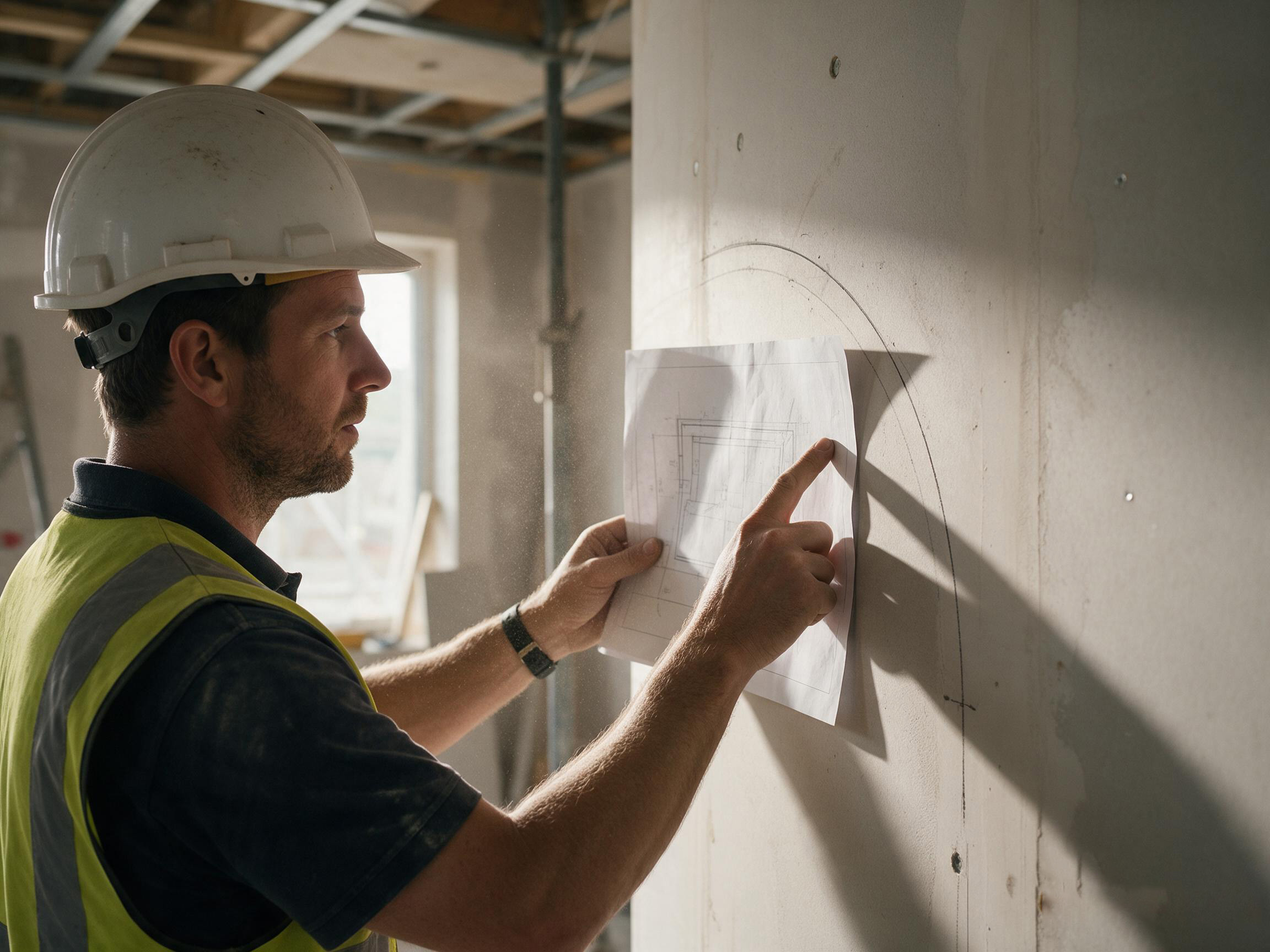
3、Plan the bend direction before you mount the LED strip
Most failed curves come down to one thing nobody settled in advance: which way the strip bends.
A strip bends horizontally or vertically. Two ways. Not the same thing. Some boards only fold in one plane. Fold the other way and the circuit cracks right there on the spot. We have watched it on a bench. A quick fold, a small pop, dead.
Wrapping a column? Horizontal. Turning from wall up to ceiling? Vertical. The two load the board completely differently, so check the bend capability against the channel shape while the plan is still on paper, not once the installer is up the ladder.
Our habit is to mark the minimum bend radius on the irregular drawing first. Then swap the product or adjust the channel anywhere the curve runs tighter than that radius. Tracing the radius with a template takes a few minutes. Guessing on the ladder costs a callback. And a board that folds one way often will not fold the other way at all.
4、The install details that stop an LED strip from cracking
Bend a strip to its limit and it stays loaded. That load never lets go on its own. Give it time and it shows up as lifted adhesive or a cracked board. A few details stop that:
|
What to do |
What it stops |
|
Do not force the bend, let it settle on its own |
Creases and broken traces |
|
Stay above the minimum bend radius |
Cracks that show up later |
|
Pack more fixing points on the curve |
Lifted edges and peeling |
|
Leave a bit of slack at each corner |
Fatigue failure over time |
|
Trial-fit before the final mount |
Reworking the whole run |
Do these and you stop most of the peeling, cracking, and uneven light before it starts. On a curved run, add a fixing point right at the apex of each arc. That is the spot where the strip tries hardest to lift. Put a clip there — not the same spacing you would use on a straight run.
5、How to keep light even through the curve of an LED strip
Fitted is not finished. That is the part people miss. What ruins a curved channel is uneven brightness at the turn — the tighter the arc, the wider the chips get pulled apart, and the corner throws a hot spot. You see it the moment the lights come on. One bright patch at the bend. To keep the line visually continuous we watch a few parameters:
|
Parameter |
What to watch |
|
Chip density |
Too few chips on the arc and the turn shows a hot spot |
|
Light uniformity |
Prefer COB LED strip for a continuous line |
|
Color consistency |
One batch and one color temperature for the whole loop |
|
Profile diffusion |
Add a diffuser cover or an aluminum channel |
|
Channel depth |
Depth changes the beam angle and evenness |
Designers reach for COB LED strip first on irregular projects. The evenness is done once, and it stays done. Color temperature matters the same way. Mix batches across a large curve and LED strip color consistency issues show up at a glance. A single loop should come from one batch and one color temperature, with CRI kept as high as the budget allows. On hotel jobs we push CRI to 95 or higher. At dusk the difference shows up.
This kind of curved work turns up most in interior commercial lighting — clothing stores, showrooms, hotel-lobby curved ceilings. Outside, outdoor lighting project work, building outlines, and landscape shapes run on the same flexible neon LED strip logic. Linear light and linear lighting are no longer the hard limit they once were. The real barrier is still early selection and planning.
6、Common questions about LED strip lights
Q1: Can flexible LED strip lights bend around a curve?
A: They will. Both COB LED strip and a silicone flexible neon LED strip follow an arc fine. Just stay above the minimum bend radius. Fold it into a hard crease and the traces crack.
Q2: How do you bend a flexible neon LED strip?
A: It bends a full 360, so just let it follow the shape. Leave a little slack at each corner. Fold the same spot back and forth and it will snap.
Q3: What is the minimum bend radius for LED strip lights?
A: Depends on the model. A standard flexible LED strip manages a few centimetres, the narrow ones a bit less. Push past the limit and the board or a solder joint cracks.
Q4: How do you fix an LED strip in a curved channel?
A: Clips or adhesive tape, either works. Pack the fixing points closer on the curve than on the straight runs. Add an aluminum channel where the bend is sharp. And trial-fit before you commit to anything.
Curved channels are not hard because of the light. They are hard because you have to land a complicated shape and an even glow at the same time. That only comes together when the bend radius, the mounting method, and the light output are sorted before installation — not after the problems show up.
Mingxue Optoelectronics has been making LED strip light since 2005. This is the part of the job we have kept doing for 21 years. We run a Shenzhen R&D and sales center, and a 24,000 sqm manufacturing base in Foshan that turns out 6 million meters a month. Foshan Mingxue Optoelectronics Co., Ltd. operates as a wholly-owned subsidiary of Mingxue Optoelectronics Holding Co., Ltd. The facility is ISO 9001 certified, alongside IATF16949, UL, CE, SAA and ErP.
A few jobs stick in mind. A DMX512 flexible neon LED strip project in a Japanese plaza with complex dynamic control. Hotel and villa shadowless lighting running CRI>97 COB LED strip and CSP LED strip. Commercial lighting for retail and hospitality fit-outs. And a flexible wall-washer strip built for irregular walls and outdoor lighting project work.
The rule is the same every time: sort the radius, the mounting, and the light output before installation, and the curve looks after itself. If you’d like to learn more about our LED strip lights or get a quote, feel free to leave your contact details on our official website, or call us at +86 137 1903 7641 (same number on WeChat).
MINGXUE is the brand name of Shenzhen Mingxue Optoelectronics Co., Ltd. For international markets, the company operates under the brand name MINGXUE Lighting.
Facebook:https://www.facebook.com/profile.php?id=100089993887545
Instagram:https://www.instagram.com/mingxuelighting.factory/
YouTube:https://www.youtube.com/channel/UCMGxjM8gU0IOchPdYJ9Qt_w
LinkedIn:https://www.linkedin.com/company/mingxue/
Post time: Oct-07-2026