
 Chinese
We’ve been building LED strip light at Mingxue Optoelectronics since 2005, and there’s one call our sales desk gets more than any other: “How many watts is your 6000K strip?” It never shows up solo. The same person usually tacks on “is a 6000K LED strip too harsh?” or “does 6000K use more power than 4000K?” After 21 years of these conversations, we’ve figured out the confusion is rarely about the product. It’s two words people swap around as if they meant the same thing. 6000K is the color. Watts are the electricity. Asking how many watts 6000K is works out to something like asking how many kilograms the color red weighs.
If you’re trying to sort out how to choose LED strip lights without overpaying or getting the wrong glow, splitting those two apart is step one. A lot of shoppers land on a half-wrong spin on the same question — “what color temperature for LED strip lights should I pick if I want it brighter” — when brightness was never a color-temperature thing to start with. That one mix-up is behind most of the disappointing buys people tell us about, so let’s clear it up.
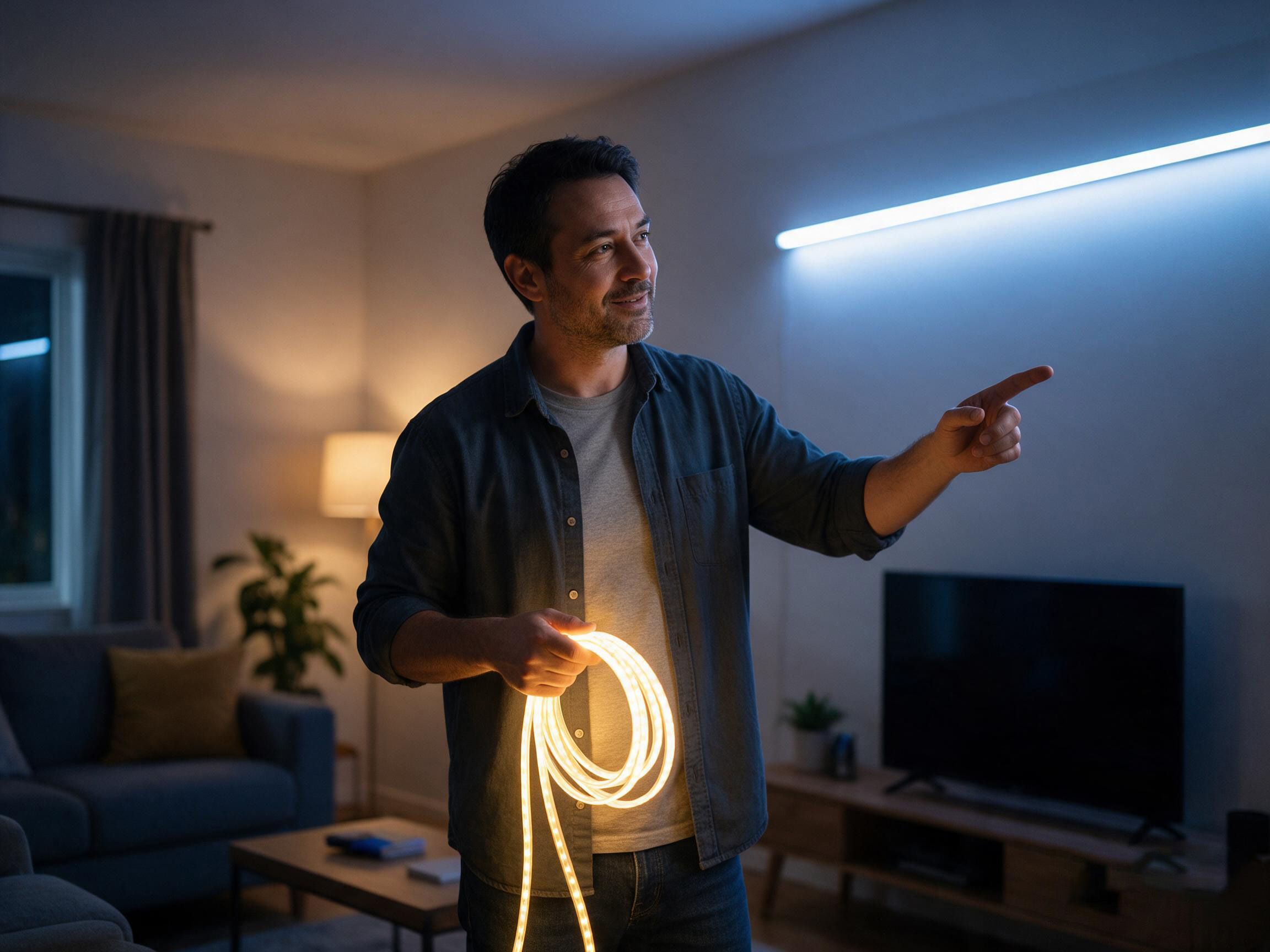
1、LED strip lights turning blue or green? Color temperature is usually the cause
Start with the units, because that’s where it goes sideways. Color temperature gets measured in kelvin, shortened to K, and the number comes from an old physics trick — heat a lump of metal and it shifts color as it climbs. Around 3000K it glows warm and yellowish; run it up to 6000K and it goes a crisp, bluish white. That’s why a 6000K LED strip reads cold and clean while a 3000K one feels soft and yellow.
Watts sit on a different scale entirely. A watt is power — how much electricity a reel drinks every hour and, roughly, how much light it can throw out. There’s no clean way to convert one into the other. You can build that same 6000K tape to run at 3 watts a meter or 20 watts a meter. The color doesn’t move; the energy bill does. So when somebody asks “how many watts is a 6000K strip,” we honestly can’t say, because no wattage hangs off a color.
A customer ran into this a while back. He wanted a “bright white” strip, and when we asked about wattage he just said “the brighter the better.” In his head, color, brightness, and power were three names for one thing. Two minutes of back-and-forth fixed it: color is kelvin, power is watts, brightness is lumens. Three words, three separate jobs. Once that clicks, buying gets a whole lot simpler.
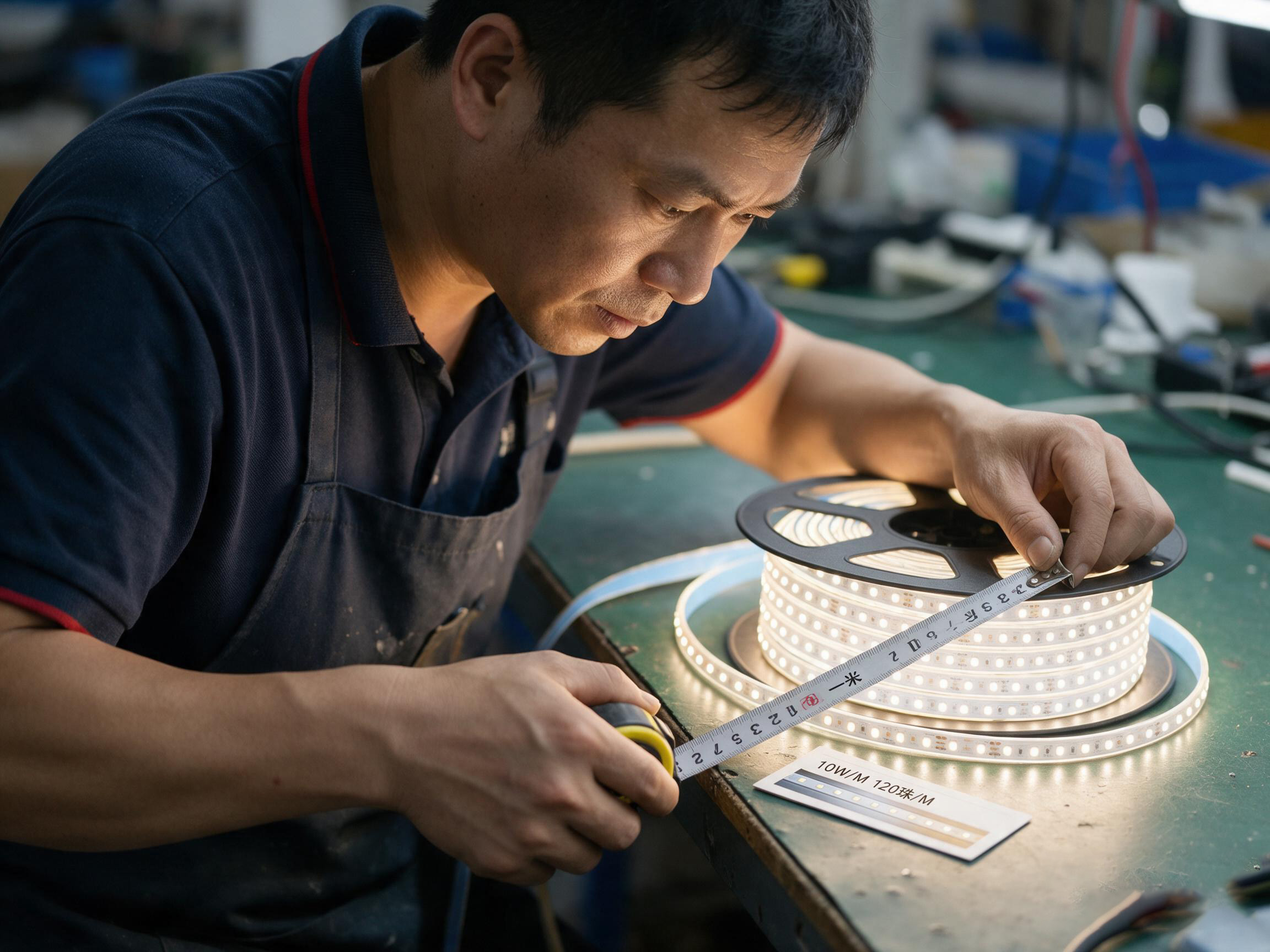
2、How many watts per meter does an LED strip light actually draw?
Here’s where the real questions show up. “How many watts per meter LED strip do I need” and “how many LEDs per meter do I need” come at us more than just about anything. On a 12V LED strip light, a meter usually lands between 5 and 20 watts, and the exact figure turns on two things: the package size of the diode and how many of them are jammed onto each meter.
Those 2835 and 5050 numbers are package sizes, not watt ratings. A 2835 is a small diode, 2.8 mm by 3.5 mm. A 5050 is bigger, 5.0 mm by 5.0 mm. Bigger package, more diodes per meter, and the watts climb with it. Here’s the two common builds on a 12V SMD LED strip side by side:
|
Chip package |
Diodes per meter |
Watts per meter |
| 2835 | 30 | 2.4 W |
| 2835 | 60 | 4.8 W |
| 5050 | 30 | 7.2 W |
| 5050 | 60 | 14.4 W |
One meter, same length, and the draw can differ by a factor of six. The math is easy: watts per diode times diodes per meter equals watts per meter, and color temperature never shows up in that formula. When you do settle on a wattage, resist the urge to grab the top number. More watts is brighter, sure, but it also runs hotter, and heat is what wears a LED strip out early. For soft ambient light and decoration, a 2835 at 2.4 to 7 watts per meter is plenty. To wash a wall or handle accent lighting, step up to a 5050 or a denser build. Voltage matters here too — a 24V run keeps its brightness over a longer stretch before it fades, which is why long coves and shop installs skip 12V altogether.
3、What color temperature works for an LED strip light? 3000K vs 6000K
Color temperature, put plainly, is just how “warm” or “cool” the light feels. The usual LED strip range breaks into three bands. Around 3000K you get warm white, a yellow-tinged glow close to an old incandescent bulb. From 4000K to 5000K it’s neutral or natural white, like midday daylight. At 6000K and up it’s cool white, leaning blue, with a clean, almost clinical look.
The naming is a mess, and it’s worth a warning. Some factories call 6000K “neutral white”; others call the 3000K to 4000K range “natural white.” Labels drift from one supplier to the next, so the number is the only thing you can count on — higher kelvin, cooler light; lower kelvin, warmer. Here’s the shorthand:
|
Color temperature |
Light color |
Typical scene |
| 3000K | Warm white | Bedroom, dining, ambient |
| 4000–5000K | Neutral white | Living room, office |
| 6000K | Cool white | Kitchen, workshop, commercial |
There’s a second trap tucked behind “6000K.” Two factories can both sell a strip marked 6000K and the actual color still drifts if the color rendering index is low. A cheap cool-white reel with a poor CRI makes food and skin look greenish or gray. So when you’re after a cool-white LED strip, don’t stop at the 6000K label — check the CRI too. The higher it is, the truer the colors under the light. At our factory we bin every reel so the shade holds even across a full run, but on the buying end, a quick look at the CRI spec — anything over 90 is a safe bet for a home — saves more grief than chasing a kelvin number.
4、Why so many people confuse color temperature and wattage on LED strip lights
This mix-up didn’t come from nowhere. It mostly goes back to the incandescent years, when wattage really was a decent stand-in for brightness — a 60-watt bulb was just brighter than a 40. A whole generation grew up reading “watts” as “brightness,” and the habit stuck. But a modern LED strip light reports its output in lumens and its spread in lux, not watts. A low-efficacy strip at 20 watts can still look dimmer than a high-efficacy one at 10.
Marketing pushed it further. When LEDs first hit the mainstream, sellers leaned on the “7 watts replaces a 60-watt bulb” pitch, which kept everyone reaching for wattage as the number that counted. Somewhere along the line, “6000K high-brightness strip” became a selling phrase, and people started folding color into the brightness bucket. Color, power, and brightness got stirred into one pot, and “how many watts is a 6000K LED strip” is the question that boiled out of it. None of it is the buyer’s fault — the language has been muddled for years. The packaging doesn’t help either; a box that shouts “6000K” and says nothing about lumens just keeps people staring at the wrong spec.
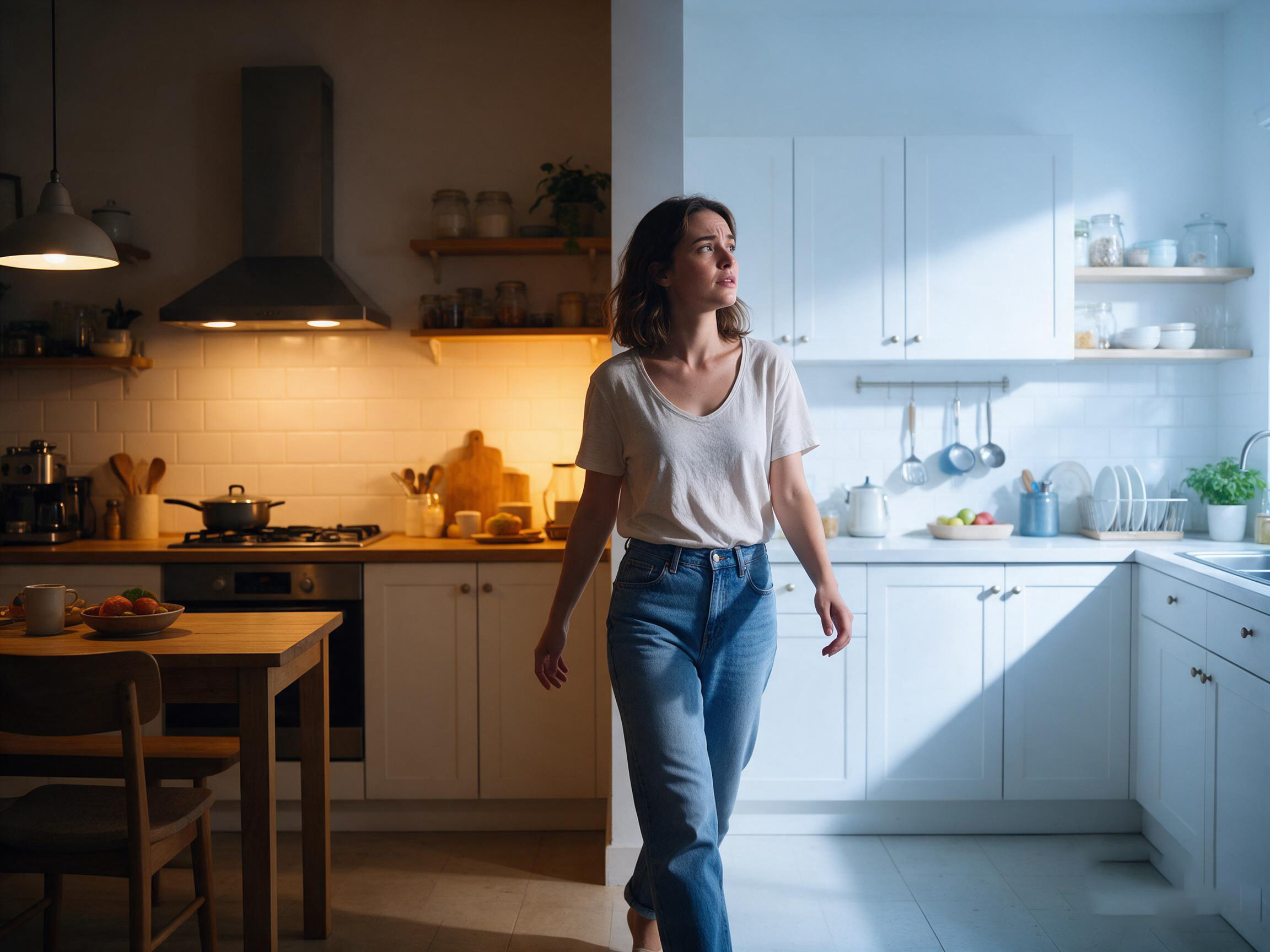
5、How to choose LED strip light color temperature and wattage separately
The cleanest way to buy is to run the two questions on separate tracks — one for color, one for power. Color temperature follows the room. A bedroom or dining area wants warm white around 3000K. A living room or office reads better at 4000K to 5000K. A kitchen, garage, or commercial lighting space feels right at 6000K cool white. Wattage follows the job. For shadowless lighting design or linear light used as fill, 5 to 10 watts per meter is usually enough; for a strip doing the main lighting, go higher.
A practical rule falls out of this. In a home with shadowless lighting, the tape often runs ten-plus hours a day, so the color temperature you pick quietly sets the mood of the whole room. Most installers will also tell you not to mix color temperatures in one space — a 3000K and a 6000K LED strip side by side make the clash obvious the second you look up. On wattage, the shorthand is: tape tucked into coves and ceiling channels stays under 10 watts per meter, while wall-washing and display work want 10 and up. Lock in the use first, then the numbers — it’s much faster than opening with “how many watts is 6000K.” And if you want to tweak the brightness down the road, pick a dimmable driver up front, because that’s where the adjustment actually gets decided.
The same two-track thinking carries over to bigger jobs. On an outdoor lighting project or a lighting engineering project — a facade, a plaza, a bridge run — color sets the mood and wattage decides whether the space is bright enough. Cross them and you end up with the wrong tint or not enough light. For those we usually recommend a 24V reel in a weatherproof channel, and the same two questions apply to every outdoor lighting project we supply.
6、Frequently Asked Questions About LED Strip Lights
Q1: How many watts is a 6000K LED strip light?
A: There’s no fixed answer. 6000K is a color temperature, not a wattage. The same 6000K strip can run from a few watts up to around 20 watts per meter, depending on how it’s built.
Q2: What’s the difference between color temperature and wattage on an LED strip?
A: Color temperature, in kelvin, controls how warm or cool the light looks. Wattage controls how much power it draws. A strip can be 6000K at almost any wattage.
Q3: How many watts per meter does a 12V LED strip light use?
A: Most 12V strips fall between 5 and 20 watts per meter. A 2835 build runs roughly 2.4 to 4.8 watts, while a 5050 build runs about 7.2 to 14.4 watts.
Mingxue Optoelectronics has been making LED strip light since 2005, and this color-versus-wattage question is one our team clears up every single week. Behind the phone number is a real operation — a Shenzhen R&D and sales center, plus a 24,000 sqm base in Foshan that Foshan Mingxue Optoelectronics Co., Ltd. runs as a wholly-owned subsidiary of Mingxue Optoelectronics Holding Co., Ltd. The plant is ISO 9001 certified and every reel gets bin-matched so the shade holds steady. So whether you’re wiring a shadowless lighting design at home or pricing out a commercial lighting job, tell us the color temperature and wattage you’re after and we’ll match the right LED strip light to it. If you’d like to learn more about our LED strip lights or get a quote, feel free to leave your contact details on our official website, or call us at +86 137 1903 7641 (same number on WeChat).
MINGXUE is the brand name of Shenzhen Mingxue Optoelectronics Co., Ltd. For international markets, the company operates under the brand name MINGXUE Lighting.
Published by Mingxue Lighting | Founded 2005 | Shenzhen R&D Center + Foshan Manufacturing Base | 24,000 sqm | ISO 9001 Certified
Facebook:https://www.facebook.com/profile.php?id=100089993887545
Instagram:https://www.instagram.com/mingxuelighting.factory/
YouTube:https://www.youtube.com/channel/UCMGxjM8gU0IOchPdYJ9Qt_w
LinkedIn:https://www.linkedin.com/company/mingxue/
Post time: Oct-08-2026