
 Chinese
LED light strips, with their advantages of energy saving, durability and flexible design, have been widely used in various scenarios such as home decoration, commercial lighting, and engineering lighting. Compared to traditional light strips, LED light strips consume less power themselves. However, in actual use, many people fail to fully utilize their energy-saving advantages due to improper selection or poor usage habits. We have compiled some tips for saving energy with LED light strips, covering the entire process from selection to use and maintenance, to help you reduce energy consumption and save electricity bills while maintaining the lighting effect and balancing practicality and economy.
1. Prioritize high-efficiency products and reject “high-power, low-brightness” products.
Luminous efficacy is the core index to measure the energy efficiency level of LED strip lights, which refers to the luminous flux (lumen) generated by per watt of electrical energy. The higher the luminous efficacy, the less electrical energy is consumed to obtain the same brightness, and the more significant the energy-saving effect. This is the most critical parameter that users should pay attention to when purchasing.
Many users have a misunderstanding that the higher the power, the better the lighting effect. This view is completely wrong. Under the condition of the same luminous efficacy, the higher the power, the greater the energy consumption. For example, two LED strip lights with the same brightness, one with high luminous efficacy and low power, and the other with low luminous efficacy and high power, the latter will consume significantly more power during long-term use. For daily household ambient lighting scenes such as ceiling, TV background wall, cabinet lamp and wardrobe lighting, LED strip lights with a power of about 8W/m can fully meet the brightness demand, and there is no need to blindly pursue high-power products. High-power configuration not only increases the initial purchase cost but also leads to long-term unnecessary electricity expenses.
In engineering and commercial lighting scenes with high brightness requirements, users should also give priority to products with high luminous efficacy instead of simply increasing power. Professional high-efficiency LED strip lights can achieve the required brightness with lower power, which is more in line with the goal of energy saving and consumption reduction.
2. Select the lamp bead density as needed
The density of LED beads (LED Beads/m) determines the brightness uniformity of the light strip and also affects the power consumption. The denser the LED beads, the higher the power per meter and the greater the power consumption.
3. Select the appropriate color temperature and type to reduce unnecessary energy consumption
Different color temperatures and types of LED light strips have varying power consumption.The power consumption of single-color LED strips is lower than that of RGB and RGBW color LED strips. Since color LED strips contain multiple chips, the power per meter may exceed 20W. If home decoration does not require a color effect, choosing single-color LED strips is more energy-efficient.
4. Identify genuine brands and energy efficiency ratings
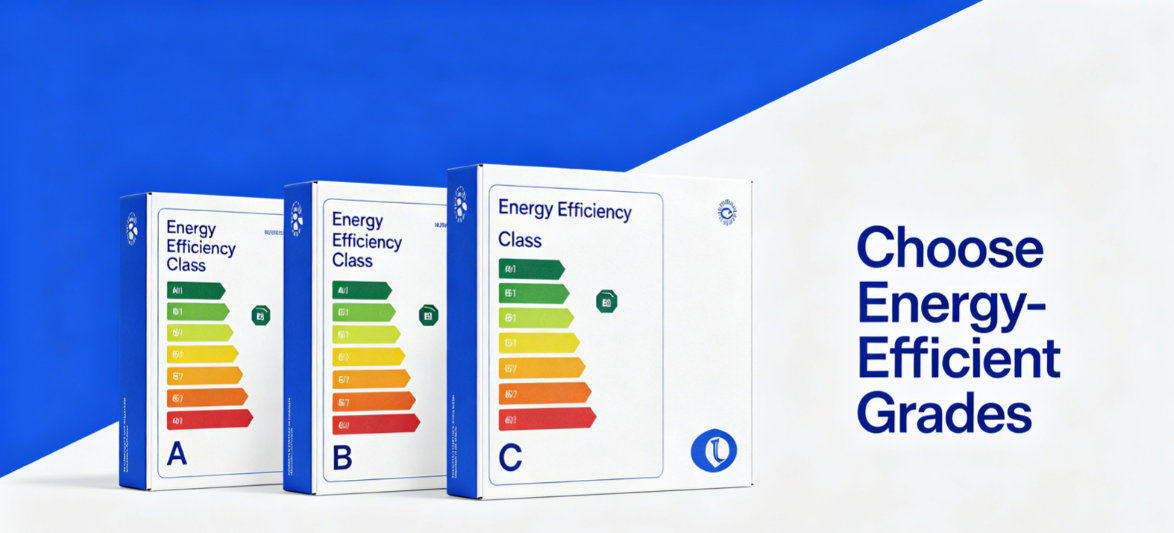
Low-quality LED light strips have problems such as low luminous efficiency, false labeling of power consumption, and short lifespan. Although they seem to be cheap, in fact, they consume more electricity over the long term and are prone to damage. When purchasing, it is necessary to identify the genuine brand and check the energy efficiency rating of the product.Prioritize products with Level 1 and Level 2 energy efficiency.
After choosing the energy-saving products, adopting proper usage habits is the key to further reducing electricity consumption. Many people overlook the details of usage, causing the LED light strips to remain in a high-energy-consuming state for a long time. Reasonably controlling the usage duration and brightness can effectively reduce electricity consumption.
1. Control the usage duration to avoid “constant illumination without turning off”
Although the power consumption of a single LED strip light is low, long-term uninterrupted operation will still lead to cumulative energy waste. Users should formulate a reasonable switching strategy according to different application scenarios.
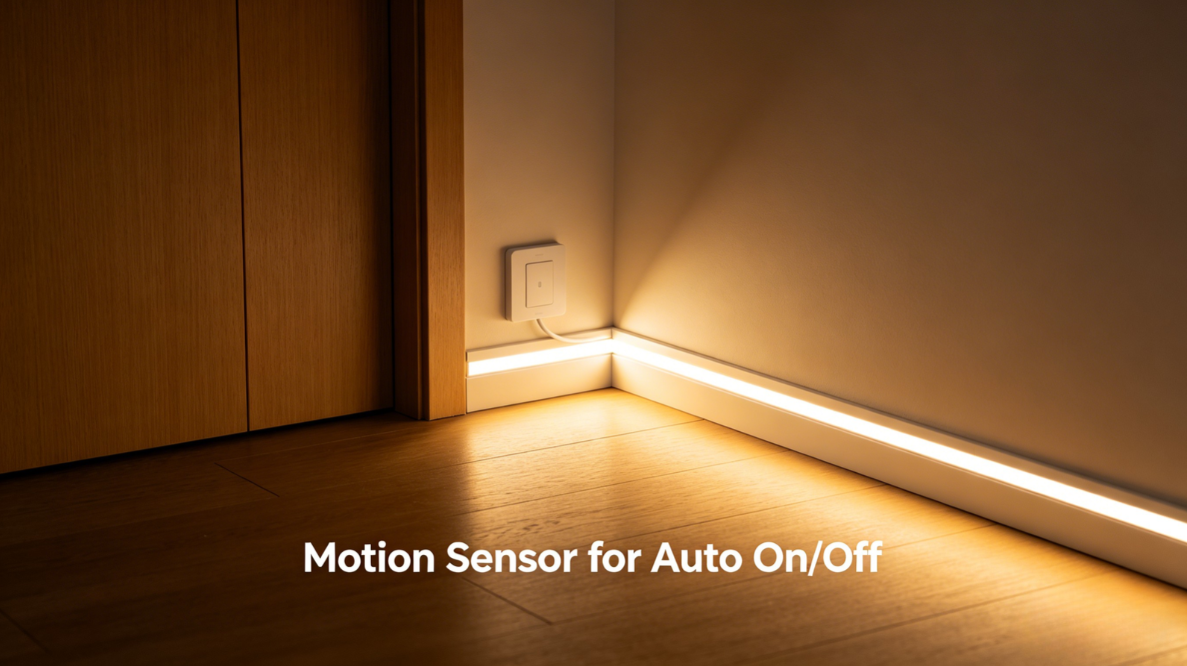
For household LED strip lights (such as ceiling trough, TV background wall, wardrobe light, cabinet light), they should be turned on only when needed at night or when receiving guests, and turned off before going to bed or when no one is using them for a long time. Avoid the situation that the lights are on all night or no one is in the room but the lights are always on.
For commercial LED strip lights (such as store window lighting, brand sign lighting, shopping mall ambient lighting), they should be strictly operated according to business hours, and turned off in time after closing or during non-business hours in the middle of the night, eliminating 24-hour continuous operation. For engineering lighting such as urban landscape and building contour, time control devices can be added to realize automatic switching and reduce manual misoperation.
Taking a household LED strip light with a power of 7.2W per meter as an example, turning it off for 1 hour more every day can save about 0.22 kWh of electricity per month. Although the single-day saving is small, the cumulative effect is very significant over the years, which can obviously reduce the household electricity expenditure. For commercial and engineering scenarios with large-scale use of LED strip lights, the energy and cost saved by controlling the use time are even more considerable.
2. Adjust the brightness to suit the scene, without using “full brightness” throughout the entire process
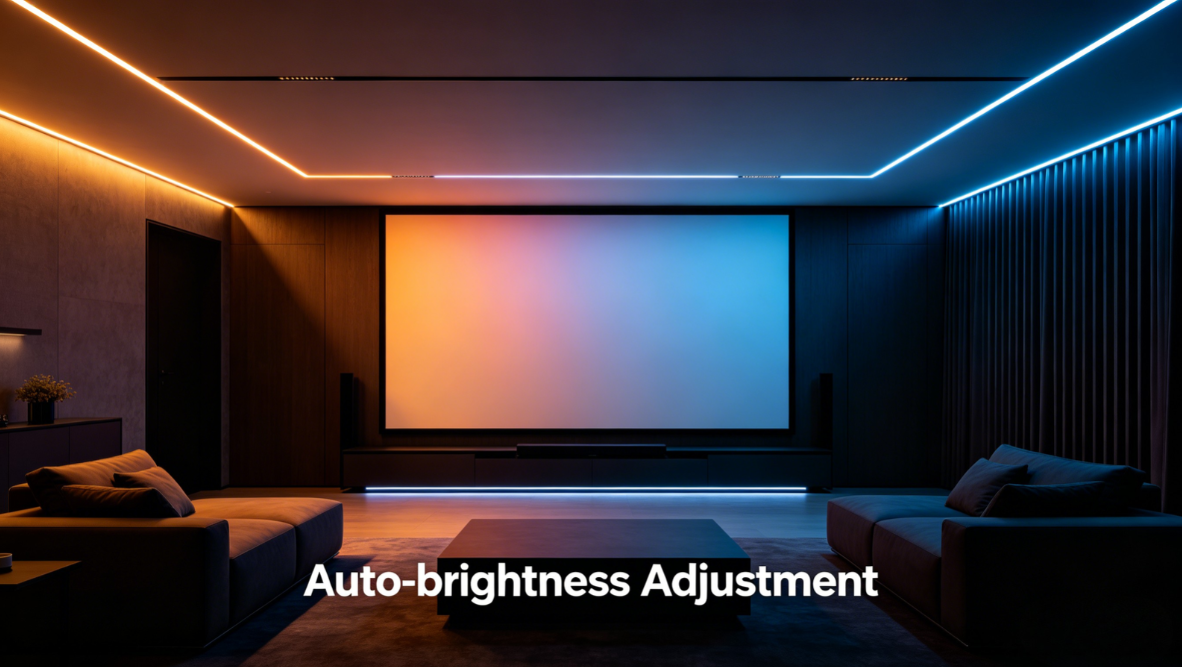
LED strip lights support stepless or graded brightness adjustment, which is an important advantage to achieve refined energy saving. Different scenarios have different requirements for brightness, and there is no need to maintain full brightness all the time. Properly reducing the brightness can directly reduce power consumption, and the energy-saving effect is obvious.
Specific scenario application suggestions:
Night getting-up lighting: Adjust the bedroom LED strip lights to 30% brightness, which can fully meet the lighting needs for getting up at night, and the power consumption is only 30% of the full brightness.
Living room leisure and entertainment: Adjust the brightness to 50%-70%, which can maintain a warm and comfortable indoor atmosphere without excessive brightness and energy waste.
Commercial display and window lighting: Adjust the brightness according to the ambient light intensity. In the daytime with sufficient light, appropriately reduce the brightness; in the night with dark ambient light, increase the brightness appropriately to avoid energy waste caused by fixed full brightness.
Public corridor and engineering auxiliary lighting: Use low-brightness mode for a long time to meet the basic lighting needs and reduce energy consumption.
Brightness adjustment is the simplest and most effective energy-saving operation. With the help of intelligent dimmers, remote controls and other devices, users can easily realize one-key adjustment and maximize energy-saving benefits.
3. Reasonably match the power supply and reduce power loss
The power supply selection for LED light strips is closely related to their power consumption. If the power supply is too powerful or has too low efficiency, it will cause additional energy loss. When choosing a power supply, it is necessary to match the total power of the light strip. A power supply with a power 10% to 20% higher than the total power of the light strip is sufficient.
4. Ensure proper heat dissipation to prevent the increase in energy consumption due to high temperatures.
During the operation of LED strip lights, a small amount of heat will be generated. If the heat dissipation conditions are poor, the heat will accumulate, resulting in the decrease of luminous efficiency of lamp beads, the increase of actual power consumption, and long-term high temperature will also accelerate the aging of light sources and circuits, shortening the service life.
Measures to optimize heat dissipation:
Avoid installing LED strip lights in fully enclosed narrow spaces, which is not conducive to air circulation and heat dissipation.
Use aluminum profiles for auxiliary installation. Aluminum has excellent thermal conductivity, which can quickly conduct out the heat generated by the lamp strip, reduce the working temperature, maintain stable luminous efficiency, and avoid the increase of energy consumption caused by high temperature.
Avoid installing the lamp strip in high-temperature environments such as near heating equipment, direct sunlight for a long time.
Technical data show that for every 10°C increase in the ambient temperature of LED strip lights, the photoelectric performance will decrease by more than 5%, which indirectly leads to the increase of power consumption to maintain the same brightness. Good heat dissipation design can keep the lamp strip in a low-temperature working state for a long time, stabilize energy efficiency and prolong service life.
As a professional LED strip light manufacturer with independent R&D and production capacity, we have always taken “high efficiency, energy saving, high performance and durability” as the core product concept. We focus on the research and development of high-luminous-efficacy LED strip light products that meet international and national energy efficiency standards, and have a complete product matrix covering household, commercial, engineering, landscape and other scenarios. We are committed to providing users with integrated solutions from product selection, scheme design, installation guidance to after-sales maintenance, helping every user realize “lighting effect without discount, energy saving and consumption reduction without worry”.
We always adhere to technological innovation and quality first, continuously improve the energy efficiency level of products, and contribute to the development of global green lighting. If you have any needs or questions about the selection, installation, use and energy-saving optimization of LED strip lights, please feel free to contact our professional team. We will provide you with customized energy-saving lighting solutions and high-quality technical services to create a more efficient, economical and environmentally friendly lighting experience for you.
Facebook:https://www.facebook.com/profile.php?id=100089993887545
Instagram:https://www.instagram.com/mx.lighting.factory/
YouTube:https://www.youtube.com/channel/UCMGxjM8gU0IOchPdYJ9Qt_w/featured
LinkedIn:https://www.linkedin.com/company/mingxue/
Post time: Apr-14-2026