
 Chinese
The Wrong LED Strip Can Cost You the Whole Project
Last year a lighting contractor in Madrid called us in a panic. They’d installed a premium-looking LED ribbon in a boutique hotel cove, and the client refused the final payment. Why? Because from the lobby sofa you could see every single LED dot reflected in the polished marble floor. The contractor had spec’d a standard 5050 SMD strip where they should have used COB.
We see this mistake at least twice a month.
If you’re a lighting designer, architect, or contractor, the COB vs SMD decision is no longer a nice-to-know technical detail. It’s the difference between a clean, high-end installation and a callback that eats your margin.
At Mingxue Lighting, we’ve been manufacturing LED strip since 2005. Over that time we’ve shipped both COB and SMD products to more than 60 countries. This guide is what we’ve learned in the factory and on job sites — not theory from a datasheet.
What Is a COB LED Strip?
COB stands for Chip on Board. Instead of mounting individual LED packages along a flexible PCB, the manufacturer bonds a long, continuous phosphor-coated LED chip directly onto the strip. The result is a line of light with no visible diode spacing.
Think of it this way: SMD is a string of pearls. COB is a continuous strand of light.
COB strips typically have hundreds of tiny flip chips per meter — 480 chips/m is common — embedded under a single phosphor layer. The phosphor diffuses the light so your eye can’t locate individual source points. That’s why COB is often called “dotless LED strip” or “neon-effect strip” in trade catalogs.
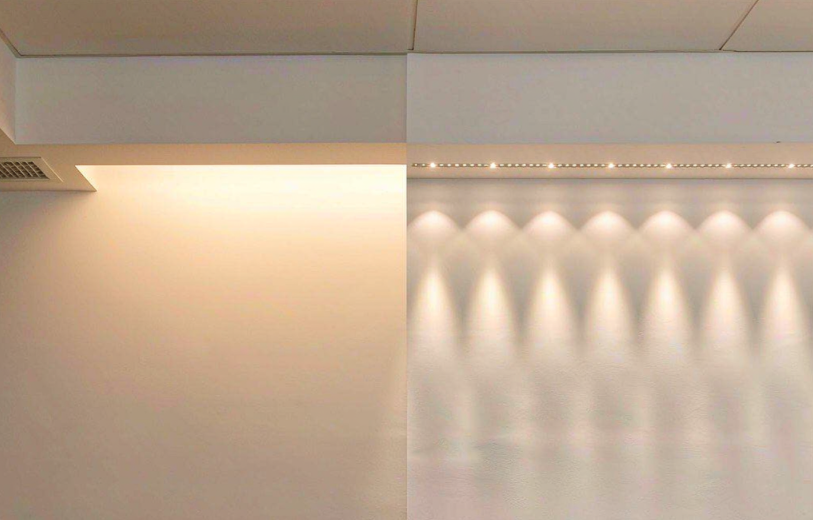
The technology matured rapidly between 2020 and 2024. Early COB strips had lumen output and color shift issues. The current generation — particularly COB-480 and CSP-COB hybrids — performs close enough to high-density SMD that the discussion has shifted from “can COB replace SMD?” to “where does COB make more sense?”
What Is an SMD LED Strip?
SMD stands for Surface Mount Device. These are the traditional LED strips most people picture: a flexible PCB with small rectangular LED packages soldered at regular intervals. The most common packages are 2835, 3528, 5050, and 2216.
SMD is mature, cheap, and extremely flexible in terms of configurations. Want RGB? SMD. Want tunable white? SMD. Need a 5-meter reel for under $20? Almost certainly SMD.
The trade-off is the “dot effect.” Because each LED is a discrete point source, you can see individual bright spots unless you:
●Hide the strip deep inside an aluminum profile
●Use a thick frosted diffuser
●Run the strip far enough from the illuminated surface
●Use a very high LED density (240 LEDs/m or more)
None of those fixes is free. Deep profiles add depth. Thick diffusers steal light. And high-density SMD strips can cost as much as COB while still not matching the smoothness.
COB vs SMD: The 7 Things That Actually Matter
When designers ask us “which one is better?” we always answer: “Better for what?” Here is how they stack up on the criteria that decide real projects.
1. Light Quality and the “Dotless” Look
This is COB’s headline advantage. Because the light source is continuous, COB strips eliminate the “polka dot” effect you see on coves, backlit panels, and reflective surfaces.
We measured this ourselves in our lab using a standard 60° beam-angle 5050 strip and a 480-chip COB strip, both at 4000K and mounted 150 mm from a matte white surface:
●SMD: Visible peaks every 8.3 mm; luminance variation of roughly 40% between LED center and gap
●COB: Luminance variation below 8% across the entire illuminated area
For hospitality, retail, and residential projects where the strip is visible or reflected, COB wins almost every time.
SMD can still work — but only if you budget for a deep profile + quality diffuser, or accept running at very high density. In many cases those workarounds cost more than just switching to COB.
2. Color Rendering (CRI / TM-30)
Both COB and SMD can be built with high-CRI chips. The technology itself doesn’t limit color quality. What we’ve noticed in practice is that COB tends to make color rendering more consistent across the beam because the phosphor layer mixes the light before it exits.
With SMD, each diode has its own lens and slight variation. On budget SMD strips you can sometimes see a faint color fringe at the edge of the beam. On COB, that fringe is usually softer.
For our own product lines:
●Standard SMD 2835: CRI 80–90
●Premium SMD 2216: CRI 90–95
●COB-480: CRI 90+ standard, CRI 95+ available
●CSP-COB hybrid: CRI 95+, R9 > 90
If the project is a jewelry store, art gallery, or premium residential kitchen, we push toward COB or high-CRI CSP-COB.
3. Color Consistency (Binning and SDCM)
Color consistency is where cheap strips of either type fall apart.
SMD strips are made from reels of LEDs sorted into bins. A manufacturer can buy “3-step MacAdam” bins for premium products and “5-step” or unbinned chips for budget lines. The problem shows up when you join two reels from different batches — you may see a visible step.
COB has a different challenge. Because the phosphor is applied in a continuous coating process, batch-to-batch color drift can be larger if the coating line isn’t tightly controlled. But within one production run, COB tends to be more uniform because the phosphor covers hundreds of chips at once.
Our rule of thumb:
●For a single continuous run under 5 meters: COB is usually more forgiving
●For long installations with multiple power feeds: ask for SDCM < 3 for either type, and buy the full quantity in one batch
We’ve had a client in Dubai who installed 80 meters of SMD strip around a hotel suite ceiling. Three reels were from a different bin. The color step was visible at dusk and cost them a rework. With COB ordered as one batch, the risk is lower — but not zero.
4. Flexibility and Bend Radius
Here’s a surprise for some people: COB is actually more flexible in tight curves than SMD.
Why? Because the small flip chips in COB are distributed along the strip, and there are no rigid rectangular packages to stress. You can bend a good COB strip to a radius of 20–30 mm without damaging the chip.
SMD packages are larger and more rigid. Bend a 5050 strip too sharply and you risk cracking the solder joint or the LED package itself. With 2835 it’s better; with 2216 it’s even better. But none of them match COB for tight-radius installations.
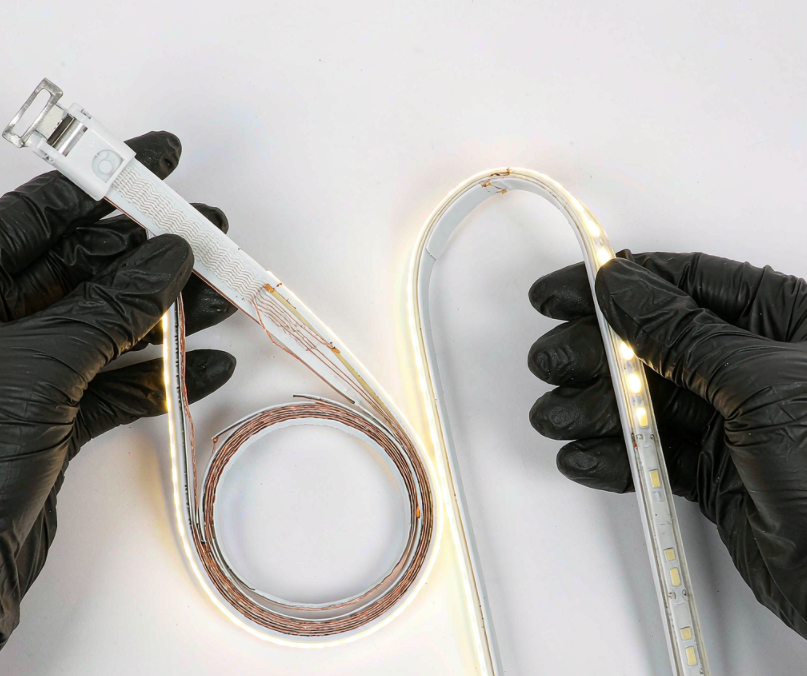
Caution: COB is more flexible in bending, but it can be more fragile in twisting. The phosphor layer doesn’t like being torqued. Installers who twist the strip during mounting can crack the coating and create dark lines.
5. Efficiency (Lumens per Watt)
SMD used to win this category easily. Not anymore.
Modern high-efficiency SMD 2835 chips can reach 180–200 lm/W in strip form. COB-480 strips are typically in the 140–170 lm/W range. CSP-COB hybrids can get closer to 180 lm/W.
So if raw efficiency is your only metric, SMD still has a slight edge — especially in non-visible installations where dotting doesn’t matter.
But the comparison changes when you add optics. If you need to hide SMD dots with a diffuser, you lose 15–25% of output. If you need a deeper profile, you lose effective throw. Once you account for those losses, COB is often the more efficient real-world solution for visible-light applications.
6. Lifespan and Reliability
Both technologies are rated for similar L70 lifespans — typically 30,000 to 50,000 hours for quality products.
The real difference is in thermal management. COB spreads heat across a larger phosphor area, but the flip chips are packed tightly. If the strip is mounted in a poorly ventilated profile or overdriven, COB can fail faster than expected.
SMD has more air gap between packages, which helps heat dissipation in open-air installations. In our accelerated aging tests at 60°C ambient:
●Premium SMD 2835 (24V, 14.4 W/m): L70 at ~45,000 hours
●COB-480 (24V, 12 W/m): L70 at ~40,000 hours
●COB-480 with aluminum profile: L70 at ~50,000+ hours
The aluminum profile is doing the work here. For COB, we always recommend mounting on an aluminum channel unless it’s a very low-power application.
7. Cost and Lead Time
SMD is still cheaper at the component level. A budget 2835 strip can cost 30–50% less than an equivalent COB strip.
But project cost is different from product cost.
We ran a real quote for a 120-meter hotel cove project:
●Option A: SMD 2835, 120 LEDs/m, plus deep aluminum profile + opal diffuser = $X
●Option B: COB-480, standard profile + clear cover = $X + 18%
The COB option was 18% more expensive on materials but saved roughly 30% on installation labor because the installer didn’t need to worry about dotting, diffusion, or multiple profile depths. For that project, COB was cheaper in total installed cost.
Lead time is roughly similar for both. The global supply chain for SMD packages is deeper, so during component shortages SMD can sometimes be faster. But most established manufacturers keep both in stock.
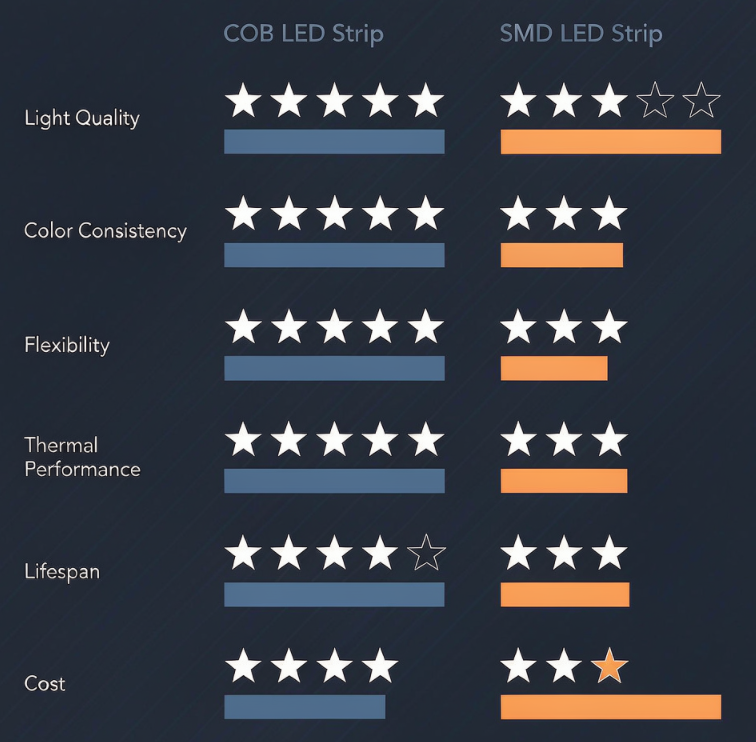
Side-by-Side Comparison Table
| Criteria | COB LED Strip | SMD LED Strip |
| Light appearance | Continuous, dotless line | Visible LED dots at normal densities |
| Best CRI | 90–95+ standard on quality lines | 80–95+ depending on chip grade |
| Color consistency | Excellent within one batch | Depends on binning; check SDCM |
| Bend radius | 20–30 mm possible | 50 mm+ for 5050; better for 2835/2216 |
| Efficiency | 140–180 lm/W | 160–200 lm/W in premium chips |
| Heat management | Needs aluminum profile for long life | More forgiving in open air |
| Cost per meter | Higher | Lower |
| Best for | Visible coves, hospitality, retail, backlighting | Hidden lighting, cost-sensitive projects, RGB |
| Common densities | 320–480 chips/m | 60–240 LEDs/m |
Where COB LED Strip Wins
After 20 years of field feedback, here are the applications where we almost always recommend COB:
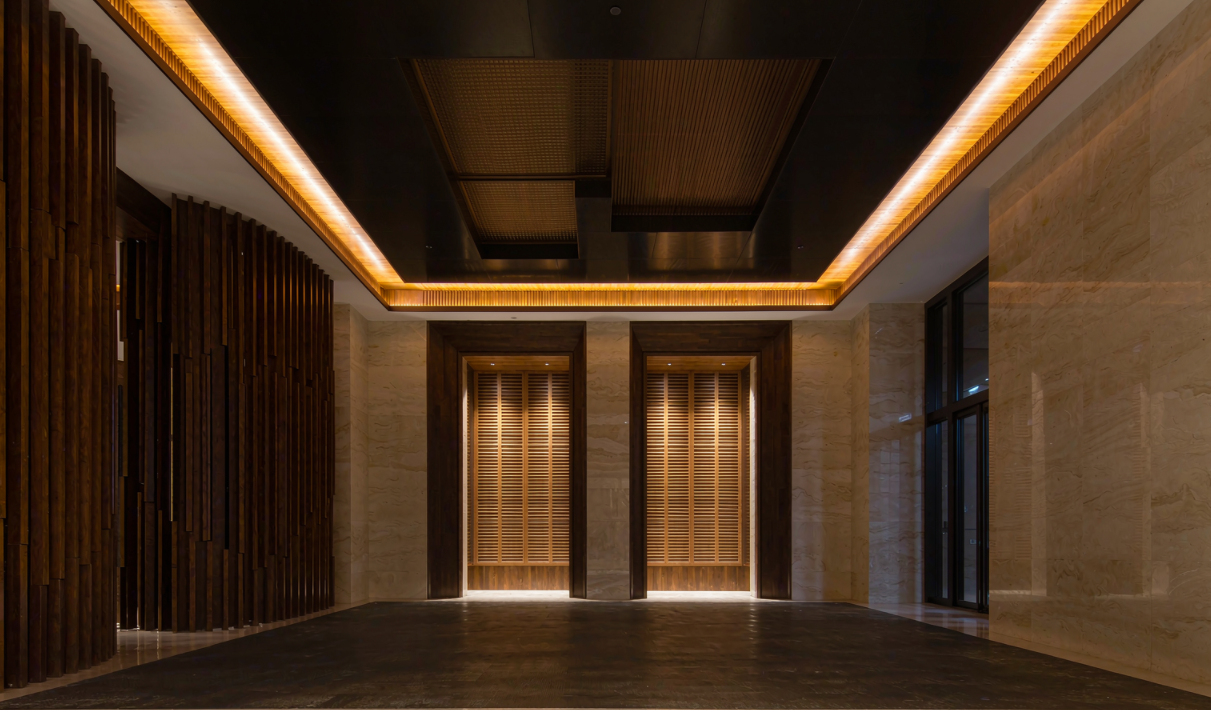
●Cove lighting in high-end residential and hospitality: The strip is hidden but its reflection isn’t. COB eliminates the dot pattern on ceilings and polished floors.
●Backlit panels and signs: Uniformity is everything. COB reduces the number of diffusers and spacing calculations you need.
●Mirror and vanity lighting: Customers stand close. Dots are unacceptable.
●Display cases and retail shelving: Products look better under continuous light.
●Neon replacement signage: COB can mimic neon glow without the glass tubes or the maintenance.
●Architectural reveals under 50 mm wide: When you don’t have room for a deep profile and diffuser, COB is your friend.
Where SMD LED Strip Still Makes Sense
We are not COB evangelists. SMD is still the right call in plenty of situations:
●Hidden applications: Inside cabinets, kickboards, or soffits where the strip itself is never seen and only the reflected glow matters.
●Budget-sensitive projects: Residential rentals, temporary displays, or any job where the lowest installed cost wins.
●RGB and pixel control: SMD 5050 packages are still the standard for RGB, RGBW, and addressable strips. COB RGB exists but is less mature and more expensive.
●High-lumen industrial lighting: When you need maximum output per watt and dotting is irrelevant.
●Outdoor wet-location strips: SMD strips with proper potting have a longer track record in IP67/IP68 applications.
If you’re choosing between a cheap COB strip and a quality SMD strip, take the quality SMD every time. A bad COB strip is worse than a good SMD strip.
3 Common Mistakes When Switching from SMD to COB
1. Using the Same Profile
COB doesn’t always need a deep diffuser, but it still needs heat sinking. Some installers reuse their SMD aluminum profiles without checking whether the profile provides enough thermal mass. It usually does, but not always for high-power COB.
2. Ignoring Voltage Drop
COB strips are often higher current density than SMD. A 24V COB-480 strip at 12 W/m pulls more current than you might expect over long runs. Feed power every 5 meters, not every 10. We’ve seen 8-meter runs with visible dimming at the end because the contractor forgot this.
3. Twisting During Install
COB doesn’t tolerate twisting the way SMD does. If you route it around a corner by twisting the ribbon, you can crack the phosphor layer. Use proper corner connectors or bend it in-plane.
How to Choose the Right LED Strip for Your Project
Use this decision tree based on what we tell our clients:
1.Will the strip or its reflection be visible?
Yes → COB
No → either
2.Is color consistency critical and the run longer than 10 meters?
Yes → COB with single-batch order and SDCM < 3
No → SMD is fine
3.Is this RGB or addressable pixel control?
Yes → SMD (5050 or specialized pixel packages)
No → COB or SMD depending on other factors
4.Is the budget the top priority?
Yes → SMD
No → COB likely gives a better finished look
5.Will the strip run in a tight space or tight radius?
Yes → COB
No → SMD
Frequently Asked Questions
Q:Is COB LED strip better than SMD?
Not universally. COB is better for visible-light applications where smoothness and dotless output matter. SMD is better for cost-sensitive or hidden applications, and it’s still the standard for RGB.
Q:Can you see LED dots on COB strips?
On quality COB strips, no. The phosphor layer diffuses the light from hundreds of tiny chips, creating a continuous glow. Cheap or damaged COB strips can show dark spots or color fringing.
Q:Is COB brighter than SMD?
Per meter, a premium SMD strip can still be brighter. But COB appears brighter to the eye in many installations because its continuous output fills the space more evenly without the dark gaps between LEDs.
Q:Does COB LED strip get hot?
All LED strips convert some power to heat. COB runs cooler at the diode level because the chips are spread out, but the strip overall needs proper heat sinking — especially in aluminum profiles — to reach its rated lifespan.
Q:Can COB strips be cut?
Yes, but the cut intervals are usually shorter than SMD because there are more chips per meter. Typical cut points are every 25–50 mm. Always check the manufacturer’s cutting marks.
Q:Which lasts longer, COB or SMD?
Both can last 30,000–50,000 hours if properly installed. Lifespan depends more on build quality, thermal management, and drive current than on the fundamental technology.
Final Take: Don’t Let the Strip Choose You
COB and SMD are both legitimate tools. The wrong choice isn’t a technology problem — it’s a specification problem.
If you spec COB where you only needed hidden task lighting, you overpaid. If you spec SMD where the client will see every LED dot reflected in the floor, you underdelivered.
The best lighting designers we work with don’t ask “COB or SMD?” They ask “What does this surface need to look like when the lights come on?”
If you want samples or a specification review for your next project, contact our engineering team. We’ve been doing this since 2005, and we’ll tell you honestly whether COB, SMD, or a hybrid is the right fit.
Related reading:
●How to Prevent Voltage Drop in Long LED Strip Runs
●LED Strip Power Supply Sizing Guide
●CRI, CCT, and TM-30: What Lighting Designers Actually Need to Know
*Published by Shenzhen Mingxue Optoelectronics Co., Ltd. | Founded 2005 | Shenzhen R&D Center + Foshan Manufacturing Base | 24,000 sqm | ISO 9001 Certified*
Facebook:https://www.facebook.com/profile.php?id=100089993887545
Instagram:https://www.instagram.com/mingxuelighting.factory/
YouTube:https://www.youtube.com/channel/UCMGxjM8gU0IOchPdYJ9Qt_w
LinkedIn:https://www.linkedin.com/company/mingxue/
Post time: Sep-04-2026